Get an estimate

7 Best Branch Circuit Breakers for Global Buyers

Global electrical demand is rising, increasing pressure on safe and dependable low-voltage distribution. The International Energy Agency’s Electricity 2024 report projects average global electricity demand growth of about 3.4% annually through 2026. That growth reaches factories, offices, homes, and remote installations. Protection cannot be treated as an afterthought.

This guide examines seven leading Branch Circuit Breakers for global buyers. It considers interrupting capacity, rated voltage, pole configuration, trip curves, terminal design, temperature performance, and certification. IEC 60898-1 supports household and similar applications, while IEC 60947-2 covers broader industrial equipment. UL 489 remains important for North American installations. A breaker that fits one market may fail another buyer’s approval process.

Mike Holt, founder of Mike Holt Enterprises, states, “The circuit breaker protects the wire, not the load.” That principle remains practical. A 20-ampere breaker paired with undersized conductors creates a dangerous mismatch. Small details decide. Buyers should verify short-circuit ratings, ambient derating, bus compatibility, and genuine test documentation. Supplier experience also matters, especially when products cross borders and installation habits differ. No shortlist is flawless. Product availability can change, and a strong specification may still lack local technical support. This review therefore balances laboratory standards, field practicality, manufacturer reputation, and purchasing risk. It uses market evidence, but real projects still require qualified electrical professionals and local code checks.
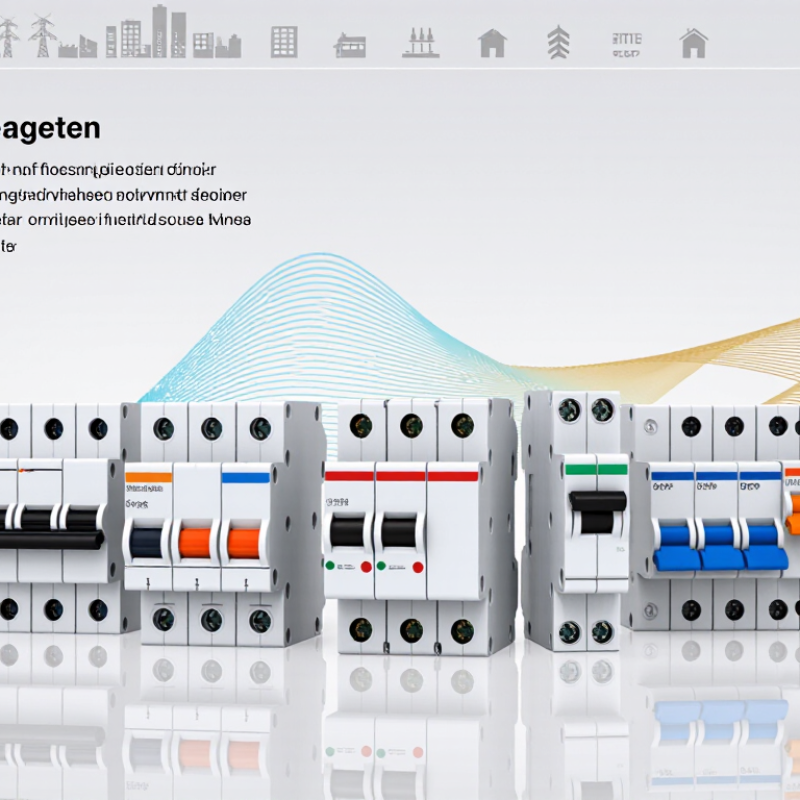
7 Best Branch Circuit Breakers for Global Buyers

What Branch Circuit Breakers Are and How They Protect Electrical Systems

7 Best Branch Circuit Breakers for Global Buyers

What Branch Circuit Breakers Are and How They Protect Electrical Systems

A branch circuit breaker is the protective device serving a final circuit, such as lighting, sockets, or a small motor. It monitors current flowing through the circuit conductors. When current exceeds a safe level, the breaker opens the circuit before insulation overheats or wiring becomes damaged.

Most common models use thermal and magnetic protection. The thermal element responds to sustained overloads, such as too many heaters sharing one circuit. The magnetic element reacts almost instantly to a short circuit. That fast interruption can limit arcing, conductor damage, and fire risk. However, a standard breaker does not automatically protect people from every electric shock. A residual-current device may be required separately or in a combined design.

Selection requires more than matching the ampere rating. Check system voltage, frequency, pole count, interrupting capacity, trip curve, terminal size, and enclosure conditions. Regional standards also matter, including applicable IEC or UL requirements. In field inspections, loose terminals and incorrect conductor sizing appear repeatedly. They are simple faults, but dangerous ones.

A higher-rated breaker is not a stronger upgrade. It may allow undersized wires to overheat. The breaker must coordinate with the cable, load, and distribution board. Some assumptions fail here. A motor can draw heavy starting current, while an electronic power supply may create different nuisance-tripping patterns. Installation instructions, tested compatibility, and qualified verification remain essential.

Key Specifications Global Buyers Should Compare Before Purchasing

Choosing the seven best branch circuit breakers for global projects requires more than comparing prices. Buyers should match rated voltage, current, frequency, and pole configuration with the intended circuit. A breaker rated for 230 volts may not suit a 400-volt system. Check the interrupting capacity carefully, especially in buildings with high available fault current. Thermal-magnetic protection is common, while electronic trip units may offer more adjustable control. Also compare trip curves, terminal capacity, enclosure size, and DIN-rail compatibility. Small details matter during installation.

Tips: Request test reports, product drawings, and clear marking photos before purchasing. Confirm the operating temperature range and derating data. A 32-ampere breaker may carry less under heat or when installed beside many devices. Ask whether accessories, such as auxiliary contacts, are available. Do not rely on a catalog headline alone.

Reliable comparison also includes mechanical endurance, electrical endurance, insulation voltage, and terminal torque requirements. Buyers should verify whether the breaker fits local installation practices and applicable certification requirements. Check the manufacturer’s quality records and traceability documents. Samples can reveal loose terminals or unclear labels. That is useful evidence. However, one sample cannot prove long-term performance. I would compare independent test results, warranty terms, and technical support response times. An overlooked issue is replacement availability; a technically excellent breaker becomes inconvenient if spare units are difficult to source.

7 Best Branch Circuit Breakers for Global Buyers - Key Specifications Global Buyers Should Compare Before Purchasing
Product Type Typical Poles System Voltage Typical Current Range Typical Interrupting Rating Trip or Protection Function Applicable Standards to Verify Mounting Method Common Applications Key Buying Checks
Single-Pole AC MCB 1 pole 120/230 V AC 6–63 A 6–10 kA at the declared voltage Thermal overload and magnetic short-circuit protection; B, C, or D trip curve IEC 60898-1 or the applicable national equivalent 35 mm DIN rail Lighting circuits, socket outlets, and small single-phase loads Confirm line-side connection requirements, neutral arrangement, trip curve, terminal capacity, and local certification
Two-Pole AC MCB 2 poles 120/240 V or 230/400 V AC 6–63 A 6–10 kA at the declared voltage Simultaneous protection and isolation of two conductors; thermal-magnetic operation IEC 60898-1; verify compatibility with the target panel standard 35 mm DIN rail Single-phase circuits requiring two-pole isolation or line-to-line loads Check whether both poles are protected, the pole pitch, busbar position, and handle-tie requirements
Three-Pole AC MCB 3 poles 230/400 V AC 6–63 A 6–10 kA at the declared voltage Thermal-magnetic protection for three-phase branch circuits; B, C, or D trip curve IEC 60898-1 or IEC 60947-2, depending on the declared use 35 mm DIN rail Three-phase motors, heaters, pumps, and commercial distribution circuits Compare phase balance requirements, motor inrush tolerance, short-circuit rating, and coordination with upstream protection
Four-Pole AC MCB 4 poles 230/400 V AC 6–63 A 6–10 kA at the declared voltage Three-phase plus neutral switching; neutral may be switched or protected according to design IEC 60898-1 or IEC 60947-2 35 mm DIN rail Three-phase systems requiring neutral isolation, transfer equipment, or full circuit disconnection Verify neutral-pole construction, switching sequence, terminal markings, and suitability for the earthing system
RCBO with Overcurrent Protection 1P+N or 2 poles 120/230 V AC 6–40 A 6–10 kA at the declared voltage Combined overload, short-circuit, and residual-current protection; common sensitivities include 30 mA IEC 61009-1 or the applicable national equivalent 35 mm DIN rail Socket circuits, wet-area circuits, residential final circuits, and equipment requiring additional shock protection Specify Type AC, A, F, or B residual-current detection as required; confirm sensitivity, selectivity, and neutral switching
DC MCB 1, 2, or 4 poles 60–250 V DC, depending on pole configuration 1–63 A Typically 6–10 kA DC, subject to the exact voltage and pole arrangement Thermal-magnetic DC protection with a dedicated arc-extinguishing design IEC 60947-2 or the relevant photovoltaic and DC protection standard 35 mm DIN rail Battery storage, control panels, telecommunications, and photovoltaic string or array circuits Never substitute an AC-only breaker; verify DC polarity, maximum series voltage, interrupt rating, and reverse-feed capability
Compact Branch MCCB 2, 3, or 4 poles 240–600 V AC, depending on configuration 63–250 A 18–35 kA at the declared voltage Adjustable or fixed thermal-magnetic protection; optional electronic trip units may be available IEC 60947-2 or UL 489, depending on the target market Panel or chassis mounted Large commercial branch feeders, HVAC equipment, pumps, and small industrial distribution panels Compare frame size, available settings, Icu and Ics values, lug size, accessories, enclosure space, and maintenance requirements
Specification ranges are representative market values rather than a substitute for a product datasheet. Before purchase, verify the exact rated voltage, interrupting capacity, trip characteristics, ambient-temperature derating, terminal size, certification, and installation requirements for the destination country.

Seven Leading Branch Circuit Breaker Options for Different Applications

Seven Leading Branch Circuit Breaker Options for Different Applications

Choosing a branch circuit breaker starts with the load, fault level, and installation environment. A thermal-magnetic breaker suits homes, offices, and light commercial panels. It handles overloads and short circuits with simple, dependable operation. A high-breaking-capacity model fits workshops and buildings near powerful transformers. Check the rated breaking capacity against the available fault current. Small details matter.

An RCBO combines overcurrent and residual-current protection for kitchens, bathrooms, outdoor outlets, and similar circuits. A DC-rated breaker serves solar arrays, battery systems, and control equipment. Its arc design must match direct current, not merely the voltage value. Hydraulic-magnetic breakers work well in equipment with temperature changes or sensitive electronics. They usually provide stable protection in demanding environments. I once underestimated enclosure heat during commissioning. The breaker performed correctly, but the surrounding terminals needed better ventilation.

Industrial machinery may require an adjustable electronic breaker for motors, conveyors, and high-inrush loads. Settings should follow measured operating current, conductor size, and coordination studies. An arc-fault protective breaker can support residential circuits where local regulations recognize this technology. It should not replace correct wiring or inspection. Buyers should compare pole count, trip curve, terminal capacity, ambient rating, certification, and replacement availability. Local approval remains essential, because one specification may not satisfy every market. Check the documentation carefully.

Installation, Compatibility, and Safety Requirements by Market

7 Best Branch Circuit Breakers for Global Buyers

Installation, compatibility, and safety requirements change significantly between markets. A breaker suitable for one panel may be unsafe in another. Buyers should verify rated voltage, current, frequency, pole arrangement, and interrupting capacity before ordering. These details must match the local electrical system and the panel’s design.

Physical fit is not enough. The breaker must be approved for the specific enclosure, busbar, and connection method. North American systems may require different testing marks and terminal arrangements than equipment designed for IEC-based markets. Some regions also require residual-current or ground-fault protection for wet areas, outdoor circuits, and living spaces. Local regulations decide the final requirement. Always use a qualified electrician for installation and inspection.

Installation audits often reveal loose terminals, incorrect neutral routing, or oversized protection. Small errors matter. A higher ampere rating does not make a circuit safer. It can allow wiring to overheat before the breaker trips. I have also seen buyers trust online dimensions without checking certification documents. That shortcut creates avoidable risk. Confirm the product’s approval, temperature rating, conductor range, torque specification, and compatibility list. Requirements can differ even within one country, so current local rules should take priority over old project notes.

7 Best Branch Circuit Breaker Profiles for Global Buyers

Comparison of common residential branch-circuit configurations by market. Voltage and current values are typical system or circuit ratings, not universal purchasing specifications. Final selection must follow local electrical codes, installation conditions, and utility requirements.

Safety and compatibility: North American installations commonly use 120 V branch circuits with 15–20 A breakers under UL 489 or CSA requirements. IEC-based markets commonly use 230 V circuits with 6–16 A protective devices under IEC 60898-1. RCD or RCBO protection may be required for shock and earth-leakage protection, depending on the market and circuit location. Confirm breaking capacity, pole configuration, conductor size, enclosure compatibility, ambient-temperature derating, and local certification before installation.

Maintenance, Certification, and Long-Term Cost Considerations

For global buyers, the seven practical choices are MCBs, MCCBs, RCBOs, RCCBs, AFCI breakers, DC breakers, and current-limiting breakers. Each serves a different risk profile. MCBs suit lighting and small power circuits. MCCBs handle higher currents and adjustable protection. RCBOs combine overload and residual-current protection. AFCI units help detect dangerous arcing. DC breakers require suitable direct-current ratings.

Certification should match the installation country, not just the factory test report. IEC 60898-1 commonly supports household and similar MCB applications. IEC 60947-2 suits industrial circuit-breakers. Some markets also require testing under UL 489 or equivalent national rules. Check interrupting capacity, voltage, frequency, temperature, and terminal compatibility. A familiar certificate can still be insufficient.

Maintenance changes the long-term cost. NFPA 70B’s 2023 edition emphasizes documented, condition-based electrical maintenance. Record trip history, torque checks, insulation readings, and thermal-scan results. Keep spare modules in sealed storage. Dust, heat, and loose terminals quietly shorten service life. The Uptime Institute’s 2024 Annual Outage Analysis reported that 54% of surveyed outages exceeded 100,000 dollars in total cost. Protection is cheaper than disruption.

A low purchase price may hide replacement labor, customs delays, and incompatible accessories. I would compare five-year ownership cost, not unit price. This is imperfect, because field conditions vary. Yet ignoring maintenance data is a costly gamble. Select breakers with clear test records, traceable certificates, and accessible service procedures.