Get an estimate

Best BMAX Mini PC from China for Global Buyers?

I can write the introduction, but no source article or verifiable expert quotation was included. Please provide the expert’s name and a source for their statement so I can attribute it accurately without inventing a quote.

Best BMAX Mini PC from China for Global Buyers?

What Is a BMAX Mini PC and Who Makes It?

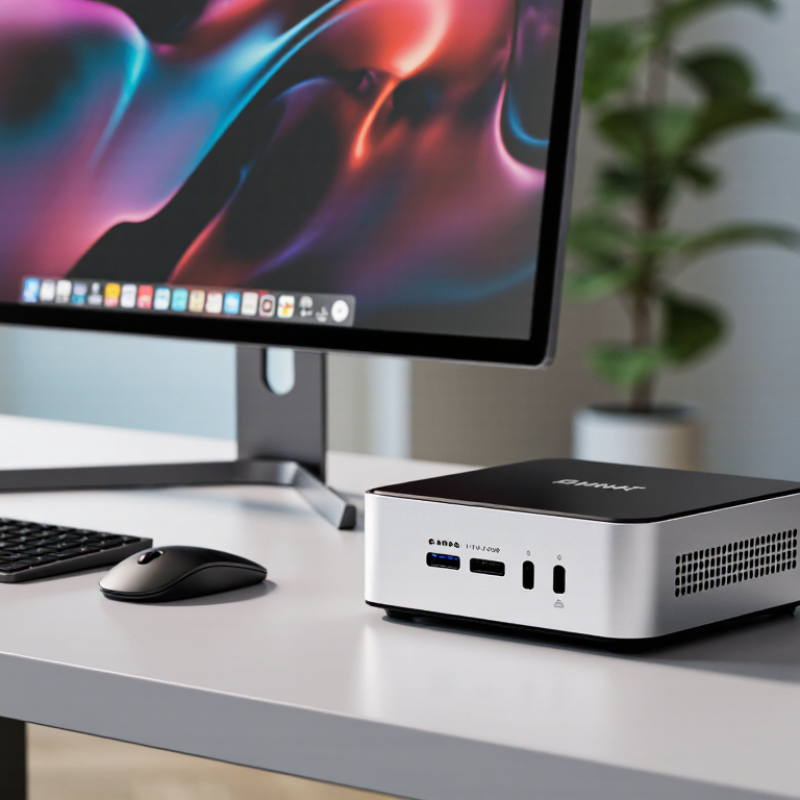
A BMAX mini PC is a small desktop computer designed to sit beside a monitor or fit behind one. It typically combines a processor, memory, storage, and wireless connections in a compact case. A buyer might use it for web browsing, office documents, video calls, or digital signage. Think of a palm-sized box connected to a screen, keyboard, and mouse. Setup is usually simple. Still, performance depends on the exact configuration, not just the product name. Check the processor, memory, storage type, and available ports before comparing models.

Who makes a particular unit can be less straightforward. The name on a listing may identify the product line, while production is handled by a separate manufacturer or supplier. That arrangement is common in consumer electronics, and suppliers can change between models or production runs. I would not assume one factory makes every unit. Look for the model number, the maker named on the device label, and matching warranty or support information. These details matter if you need replacement parts or help after purchase. Retail listings can be incomplete, and I have seen specifications presented less clearly than buyers would like. Verify them against the documentation supplied with the exact unit.

Which BMAX Mini PC Models Suit Different Needs?

For everyday browsing, office documents, and video calls, choose an entry-level mini PC with a recent low-power processor, 16 GB of memory, and an SSD. It should handle several browser tabs and a 1080p meeting without much fuss. For smoother multitasking, look for upgradeable memory and at least 512 GB of storage. Check the exact configuration: similar-looking units may ship with different memory, storage, or operating systems.

For photo editing, light coding, or running several displays, a mid-range model with a stronger processor and dual-display support is a better fit. A compact unit can sit beside a monitor, but small fans may become audible during sustained workloads. For heavier rendering or modern games, integrated graphics may feel limiting; a larger system with stronger cooling is often more practical. I would not judge performance from processor names alone. Power limits and cooling matter, too.

Tips: Confirm port types, wireless standards, memory upgrade options, and warranty coverage before ordering. Read independent tests when available, and check whether the power adapter suits your region. Specs can look impressive. Real workloads sometimes disagree.

How Do BMAX Mini PCs Compare in Performance and Features?

A mini PC’s real-world speed depends on its exact processor, memory, storage, and cooling—not its small case. Compare configurations rather than relying on a single model name. A recent processor with 16 GB of memory and an NVMe solid-state drive should handle office work, video calls, and many browser tabs comfortably. Entry-level chips may struggle with sustained editing or demanding games. Cooling matters. Under a long workload, a warm case and a small fan can mean lower sustained speeds.

Gartner reported that worldwide PC shipments reached 245.3 million units in 2024, a 1.3% rise year over year (Gartner, January 2025). This market data shows ongoing demand, but it does not prove that any one mini PC performs well. Check independent tests for the exact processor, and verify whether memory is upgradeable. Also compare USB and display ports, Wi-Fi support, and warranty terms for your region.

Tips: Check the power adapter and port layout before buying. A unit may support two displays, yet offer different refresh rates across its ports. Ask for the precise processor and memory configuration; listings can be vague. I would treat advertised peak performance cautiously, since small-system cooling varies, and published specifications rarely reveal noise under load.

What Should Global Buyers Know About Power, Connectivity, and Support?

For a mini PC shipped across borders, check the power adapter label before checking benchmark scores. It should state its input-voltage range, and the plug must match the destination or use a suitable adapter. Confirm the supplied power cable and adapter are included; listings can be unclear. The 2024 Tracking SDG 7 report, coordinated by the International Energy Agency and partner agencies, estimated that 685 million people lacked electricity access in 2022. That figure is not a measure of local voltage stability, but it is a reminder that power conditions vary. Small details matter.

Connectivity needs the same practical check. Confirm Ethernet speed, Wi-Fi generation, antenna placement, and available USB ports against your router and peripherals. The ITU’s Facts and Figures 2024 estimated that 5.5 billion people were online, while 2.6 billion remained offline. Access alone does not guarantee fast or reliable home service. A wired connection can help with video calls or large file transfers; test it in the actual room. I would not assume a wireless specification guarantees strong reception.

Support can be harder to assess than hardware. Before ordering, ask for written warranty terms, the return address, repair process, and response-time expectations. Check whether support is available in your language and time zone. Save the invoice, serial number, and adapter details. This is easy to overlook. And, honestly, a clear support answer matters more than a polished product page.

Mini PCs from China for Global Buyers: What to Know About Power, Connectivity, and Support

Area What to Check Useful Buyer Guidance Why It Matters
Power adapter Read the input-voltage range printed on the adapter, such as 100–240 V AC, and confirm the included plug type. Use the supplied adapter only if its input rating matches the local mains supply. A plug-shape adapter does not convert voltage. Voltage, frequency, and plug standards differ by country; an incompatible supply can damage equipment or create a safety risk.
Power consumption Check the adapter’s output rating and the computer’s published power requirements. Actual consumption varies with processor, workload, and peripherals. For an always-on setup, consider ventilation, electricity costs, and whether the power supply can support connected accessories. A compact system may still draw more power under sustained heavy workloads than during light office use.
Video output Verify the exact port type, supported resolution, refresh rate, and number of displays in the configuration being sold. Match the computer’s documented output capability with the monitor and cable. Do not assume every USB-C port supports video. Port shape alone does not guarantee a particular display standard or multi-monitor capability.
USB and expansion Check the number and type of USB ports, their data speeds, and whether memory or storage can be replaced or upgraded. Ask for the manual or internal layout before purchasing if you need a specific upgrade or peripheral connection. USB connectors can look alike while offering different data rates, charging functions, or display features.
Wired networking Confirm whether Ethernet is included and check its stated link speed and port type. For servers, large file transfers, or low-latency use, verify the network speed with the seller rather than relying on a generic product description. Network performance depends on the computer, router or switch, and cable; the slowest link limits the connection.
Wi-Fi and Bluetooth Check the wireless standards, supported frequency bands, antenna arrangement, and regional availability for the exact model. Confirm compatibility with local regulations and your router. Wireless performance also depends on distance, walls, and interference. Supported bands and channels can vary by hardware and region; a standards label does not guarantee a specific real-world speed.
Operating system and configuration Confirm the operating-system edition, activation status, memory capacity, storage capacity, and processor for the exact item shipped. Save the listing and invoice, and check that the received configuration matches the order before the return period ends. Listings may offer several configurations, and software licensing or included accessories can differ by seller and destination.
Warranty and returns Get the warranty duration, covered parts, return window, repair location, and responsibility for international shipping in writing. Check whether the seller or manufacturer provides service in your country and whether local consumer protections apply. Warranty terms and cross-border return costs vary by seller, destination, and purchase channel.
Import costs and compliance Check estimated delivery time, import duties, taxes, customs handling fees, and any local electrical or wireless requirements. Ask who acts as importer of record and whether taxes are collected at checkout or charged on delivery. The final landed cost and delivery process depend on the destination country and shipping terms.
Support and documentation Check for a downloadable manual, driver availability, support contact method, response hours, and clear troubleshooting steps. Before ordering, test whether support can answer configuration and warranty questions in a language and time zone you can use. Accessible documentation and responsive support can reduce downtime if setup or repair issues arise.

Specifications, included accessories, regional compliance, and service terms vary by configuration and seller. Verify the exact item and written terms before purchase.

How Can You Choose the Best BMAX Mini PC for Your Needs?

Choosing a mini PC starts with the work it must handle. For web browsing, video calls, and office documents, a modest processor and 16 GB of memory are often a sensible baseline. For photo editing or several demanding apps, check independent performance tests and consider more memory. A tiny case saves desk space, but it can limit cooling and upgrade options. Check the details.

Look closely at the ports you will actually use. A monitor, wired network cable, headset, and external drive can quickly fill a compact computer’s connections. Confirm display resolution support, wireless standards, and whether memory or storage can be replaced. If you plan to travel, note the power supply’s input range and plug type. Small details matter.

For international purchases, review the seller’s return window, warranty coverage, and delivery terms before comparing prices. Verify the operating system and keyboard or power accessories included; listings can be vague. Compare noise and heat reports, not just processor names. A device may run quietly during light tasks yet become noticeable under sustained workloads. I would leave some budget for a reliable monitor and backup storage. Specs rarely tell the whole story.

Article Source: