Get an estimate

How to Buy Anatomical Specimens Legally Worldwide?

Buying an Anatomical Specimen legally worldwide requires more than finding a reputable online seller. It demands documented provenance, ethical handling, and careful review of local regulations. Laws differ between countries, states, and even research institutions. A specimen permitted in one jurisdiction may require special authorization elsewhere.

Reliable buyers should verify the supplier’s registration, export permissions, ownership records, and chain of custody. Ask where the specimen originated, how consent was obtained, and which preservation methods were used. For human remains, written evidence of lawful donation or institutional transfer is essential. Animal specimens may also involve wildlife, veterinary, conservation, or CITES requirements. Customs officers may request permits, health certificates, embalming details, or transport documentation. Keep every record.

Professional guidance matters. Universities, accredited museums, licensed laboratories, and established medical suppliers often provide clearer documentation than anonymous marketplaces. Yet reputation alone is not proof. A polished website can still hide incomplete records. This is where buyers must slow down and question assumptions. Consult an attorney, compliance officer, or relevant government authority before payment or shipment.

The practical details can be demanding. Packaging may require leak-proof containers, temperature control, hazard labels, and approved couriers. Import taxes and inspection delays can affect delivery. Cultural and religious concerns also deserve respect, especially when human material is involved. The safest purchase is not always the fastest or cheapest. It is the one supported by transparent evidence, informed consent, and verifiable legal approval. Even experienced professionals can overlook a regional rule, so independent verification remains necessary.
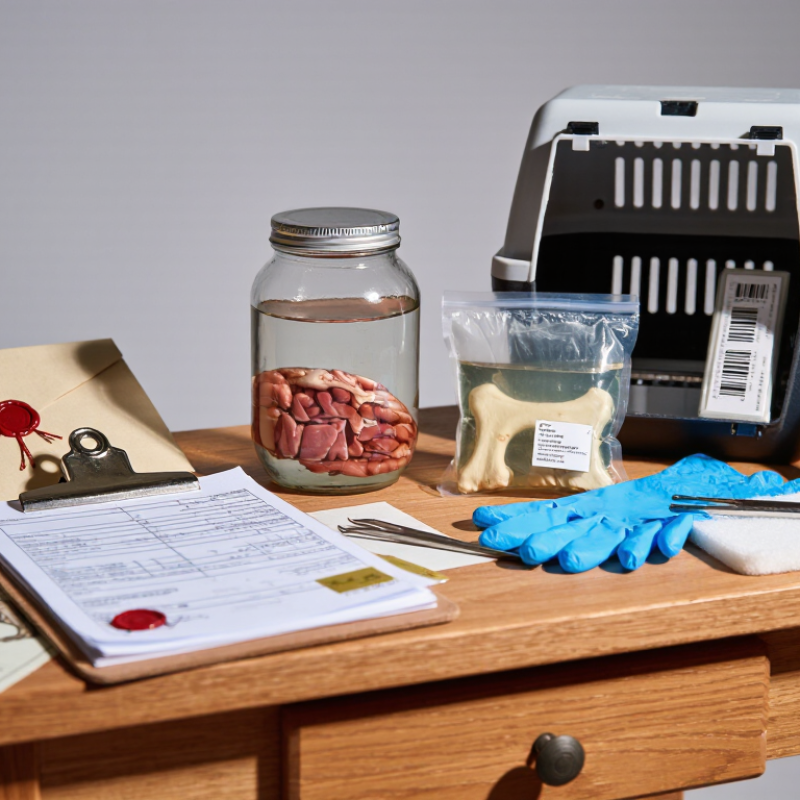
How to Buy Anatomical Specimens Legally Worldwide?

Defining Anatomical Specimens and Their Legal Uses

How to Buy Anatomical Specimens Legally Worldwide?

Defining Anatomical Specimens and Their Legal Uses

Anatomical specimens are preserved human or animal tissues, organs, bones, or body sections. They may be fixed, plastinated, dried, or stored in controlled conditions. Their purpose matters. A teaching model is not the same as a human donor specimen.

Human specimens usually require documented consent, ethical approval, traceability, and secure handling. The World Health Organization’s 2020 Laboratory Biosafety Manual recommends a risk-based approach rather than one universal handling rule. That distinction is important. Laws differ between countries, and sometimes between regions within one country. The EU’s regulatory framework also emphasizes safety, documentation, and responsible use for biological materials.

Legal uses commonly include medical education, pathology training, forensic research, and approved biomedical studies. The OECD Health Statistics database shows that many countries continue expanding health-professional training capacity, increasing demand for reliable educational materials. Yet demand does not remove legal duties. A specimen should come from a licensed institution, with origin records, consent evidence, transport documents, and storage instructions.

Check the paperwork.

Animal specimens may involve wildlife, veterinary, or conservation controls. Some species require additional permits under international wildlife-trade rules. Human remains require greater sensitivity and stronger governance. Mislabelled records can create serious ethical problems, even when the material looks harmless. This is where buyers can be too confident. A clear invoice alone does not prove lawful provenance. Experienced institutions verify the supplier, intended use, chain of custody, and local import requirements before any transaction.

Identifying the Laws That Apply in Each Country

How to Buy Anatomical Specimens Legally Worldwide?

Identifying the Laws That Apply in Each Country

Buying anatomical specimens legally requires country-by-country research. A permit in the exporting country may not satisfy the importing country’s rules. Check customs, public health, biosecurity, wildlife, and human-tissue regulations before payment. Human specimens may require documented consent, ethical approval, donor records, and controlled transport. Animal specimens can also require species identification and conservation permits.

The CITES Trade Database records international transactions by permit, quantity, and specimen type. Its records show why species classification matters. A mislabeled specimen can delay clearance or trigger an investigation. The 2024 World Wildlife Crime Report examined seizures involving 162 countries and territories and around 4,000 species. That scale makes informal sourcing unsafe.

Ask the supplier for origin records, legal ownership evidence, export authorization, and a complete chain of custody. Then confirm the documents with the relevant government authority, not only with the seller. Use the World Customs Organization’s Harmonized System codes to check customs classification, but do not treat a code as legal approval.

Rules can change. A checklist can still miss something. Verify storage conditions, packaging, courier permissions, and return procedures in writing. When regulations conflict, pause the transaction and obtain advice from a qualified local compliance professional.

Verifying Supplier Credentials and Specimen Provenance

Before any purchase, confirm that the supplier is authorized to handle the specific specimen type in its jurisdiction. Ask for current permits, institutional credentials, and written confirmation that the proposed transfer is allowed where both parties operate. Names on documents should match the contracting entity. Small discrepancies matter.

Provenance should be documented, not merely promised. Request records showing the specimen’s origin, collection date, consent or other lawful authority, and each transfer in its custody history. For preserved material, the records should also identify its preparation and storage conditions. Keep copies with your institutional files. Paper trails matter.

A careful supplier should explain what cannot be shared, such as private donor details, while still providing enough evidence for an independent compliance review. Have your legal or ethics office assess uncertain records before payment or shipment. Do not rely on attractive photographs or a polished certificate alone. That is not enough. I have seen how easy it is to mistake tidy paperwork for a complete history; sometimes a missing date changes the whole picture. If provenance remains unclear, pause the transaction and document why.

How to Buy Anatomical Specimens Legally Worldwide? — Verifying Supplier Credentials and Specimen Provenance
Jurisdiction or check Relevant legal framework or oversight Credentials to verify Provenance records to request Cross-border and compliance considerations
England, Wales and Northern Ireland The Human Tissue Act 2004 regulates specified activities involving human tissue. The Human Tissue Authority (HTA) licenses and inspects relevant activities and premises. Confirm whether the supplier’s activities and premises require an HTA licence, and verify any applicable licence directly with the HTA. Check that the intended use is within the permitted scope. Request records showing lawful donation or other lawful acquisition, consent or other legal basis, chain of custody, processing history, and the supplier’s authority to transfer the material. Requirements depend on the specimen type, intended activity, and destination. Confirm requirements with the relevant authority before shipment; an HTA licence is not, by itself, proof that every specimen or export is lawful.
Scotland The Human Tissue (Scotland) Act 2006 and the Anatomy Act 1984 are relevant to different activities involving human tissue and anatomical specimens. Identify which Scottish rules apply to the specific material and activity. Verify any required authorization, registration, or premises approval with the competent Scottish authority. Obtain documentation of the lawful source, applicable consent or authorization, specimen identity, handling history, and documented transfer between custodians. Do not assume that rules applicable in England, Wales, or Northern Ireland apply unchanged in Scotland. Check both Scottish requirements and the destination jurisdiction’s import rules.
United States Requirements for anatomical gifts, dissection, and handling of human remains are substantially governed by state law. There is no single general federal licensing scheme covering every anatomical specimen transaction. Verify the supplier’s legal authority under the laws of the state where the specimen is held and where the activity occurs. Check any required state permits, registrations, or institutional approvals with the relevant state authority. Request a documented chain of custody, lawful donation or acquisition records, consent or other applicable legal basis, and records identifying the specimen category without unnecessary personal information. State requirements can differ. For interstate or international transfers, verify the rules at origin, transit, and destination, including applicable shipping, public-health, and customs requirements.
Canada Anatomy, human-tissue handling, and disposition rules are generally established through provincial or territorial legislation and related regulations. Confirm the supplier’s authority and any required licence, permit, or institutional approval with the applicable provincial or territorial regulator. Ask for evidence of lawful donation or acquisition, consent or other legal authorization, custody history, and documentation of any preparation or preservation. Requirements are not uniform across Canada. Confirm the destination province or territory’s rules and any federal, customs, or transport requirements relevant to the shipment.
Australia Human-tissue and anatomical examination requirements are principally set by state and territory legislation; relevant rules and approvals vary by location and activity. Verify any required state or territory licence, authority, or institutional approval with the relevant regulator. Confirm that the supplier is authorized for the specific specimen and intended use. Request traceable records of lawful source, consent or other legal basis, custody transfers, specimen description, and preservation or processing history. Check both the exporting jurisdiction and the receiving state or territory. For international movement, separately confirm applicable import, export, biosecurity, and transport requirements.
Japan The Act on the Body Donation for Medical and Dental Education and the Act on the Dissection of a Corpse and Conservation of a Corpse are relevant to body donation, dissection, and preservation. Verify the supplier’s legal role and any required institutional or governmental authorization under the applicable Japanese rules. Seek confirmation from the relevant competent authority where the legal basis is unclear. Request records establishing the lawful source and applicable consent or authorization, along with a traceable custody and handling history. Confirm that the specimen category and proposed use are covered by the relevant rules. Separately check the importing country’s requirements before arranging international transport.
Supplier identity and authorization Applicable laws depend on the specimen, activity, location, and intended use; a company’s general business registration does not establish authority to supply human material. Match the supplier’s legal entity, operating address, responsible officer, and any claimed licence or permit against the issuing authority’s public records or direct confirmation. Obtain documents linking the supplier to the specimen and showing each custody transfer. Check that records are consistent, dated, and attributable to responsible parties. Pause the transaction if documents are missing, unverifiable, altered, or inconsistent. Do not rely solely on a website statement, certificate supplied without verification, or reseller assurance.
Consent, privacy, and ethical sourcing Consent, confidentiality, and permissible use are governed by the relevant jurisdiction’s laws and, where applicable, institutional ethics requirements. Confirm that the proposed educational, research, or clinical use is within the documented legal basis and any consent restrictions. Obtain institutional ethics or governance review when required. Request a privacy-protective record of the legal basis and any use limitations. Avoid requesting or retaining identifiable donor information unless legally necessary and authorized. Do not assume consent for one purpose permits another. Verify restrictions on photography, publication, onward transfer, retention, and final disposition.
Import, export, shipping, and receipt Customs, public-health, biosecurity, transport, and local human-tissue rules may apply in addition to anatomy or donation laws. Confirm the required permits, declarations, packaging standards, and authorized receiving facility with the relevant authorities and carrier before shipment. Ensure shipment records, permits, specimen description, custody documentation, and receiving records refer to the same material and intended recipient. Obtain written confirmation of requirements at origin, transit points, and destination before payment or dispatch. Do not treat customs clearance as proof that sourcing was lawful.
Important: This table is a general verification checklist, not legal advice or a guarantee that a particular transaction is lawful. Laws and regulatory interpretations change and vary by specimen type and intended use. Confirm current requirements with the competent authority and qualified legal counsel in every relevant jurisdiction before purchase, transfer, or shipment.

Securing Permits, Documentation, and Ethical Approvals

How to Buy Anatomical Specimens Legally Worldwide?

Before arranging any transfer, identify the specimen’s origin, donor-consent basis, and intended use. Requirements differ by country and specimen type; approval for teaching may not cover research. Ask the supplying institution for written evidence of lawful donation, custody, and authorization to export. Keep the chain-of-custody record, consent documentation, and permit copies together. Small gaps matter.

The World Health Organization’s 11 Guiding Principles on human cell, tissue, and organ transplantation emphasize consent, traceability, and oversight. They are not a specimen-import permit, but offer a practical ethical benchmark. Check requirements with the relevant health ministry, customs authority, and institutional ethics committee before payment or shipment. Confirm whether documents need translation, notarization, or renewal. A shipment held at a border can compromise storage and teaching schedules.

Use an institutional procurement checklist: source, donor authorization, preservation method, intended use, destination permits, and named receiving custodian. Obtain written ethics approval or a determination that review is not required. Retain invoices and transport records, but do not treat them as proof of ethical sourcing. The OECD Recommendation on Health Data Governance highlights safeguards and accountability across jurisdictions; apply that discipline to associated donor records. Minimize personal details. In practice, requirements can remain unclear, even after careful checking; record unanswered questions and request written guidance from authorities before proceeding.

How to Buy Anatomical Specimens Legally Worldwide

Minimum compliance checkpoints commonly reviewed before acquiring, exporting, importing, or receiving anatomical specimens. Requirements vary by country, specimen origin, and intended use.

Human specimens generally require documented consent or lawful provenance and institutional or ethics approval. Animal specimens may additionally require wildlife permits, including CITES documentation for listed species. Import and export rules, customs declarations, transport records, and receiving-institution authorization should be verified with the relevant authorities before purchase.

Arranging Compliant Shipping, Import, and Storage

Arranging compliant shipping begins before a specimen leaves its collection site. Confirm that its source, purpose, and documentation meet the rules in both the exporting and importing jurisdictions. Requirements differ, and they can change. Ask the relevant authorities or your institution’s compliance officer to confirm permits, consent records, and any species-specific restrictions. Keep copies of approvals with the shipment file.

Use a carrier experienced in regulated scientific materials. Agree on packaging, labeling, temperature control, and delivery timing before dispatch. The sender should describe the contents accurately and provide the required transport documents; border declarations must match them. A neat label is not enough. Keep provenance records and permit numbers accessible, and do not repackage a shipment unless authorized procedures allow it. Small paperwork gaps can cause costly delays.

Plan storage before delivery. Assign a secure, access-controlled location with conditions appropriate to the specimen and its preservation method. Record receipt, condition, storage location, and any transfer between authorized custodians. Follow institutional biosafety and maintenance procedures, and ask a qualified safety officer about handling requirements. I have seen planning focus heavily on shipping and too lightly on arrival. That part deserves a checklist, even when the route seems routine.