China Best LCD Screen Manufacturer for Global Buyers?
Choosing the China Best LCD Screen Manufacturer for Global Buyers? The answer requires more than attractive pricing. A dependable supplier must combine stable production, accurate specifications, responsive communication, and measurable quality control. Every detail matters, from a clean-room assembly line to the brightness uniformity visible across a 10.1-inch panel.
As display analyst Bob Raikes has written, “The display is the product.” This statement remains highly practical. For buyers, an LCD Screen is not merely a replacement part. It shapes touch response, readability, power consumption, and the user’s trust in the final device. Experienced Chinese manufacturers should provide engineering samples, product drawings, inspection records, and clear explanations of panel grades. They should also support customization for industrial equipment, medical devices, vehicle displays, POS terminals, and smart home products.
Look beyond factory photographs.
A serious evaluation includes factory audits, sample testing, aging tests, and communication during difficult conversations. Ask how the supplier handles dead pixels, color variation, late components, and warranty claims. A reliable manufacturer will not promise perfection. No factory is perfect. However, it should identify risks early and document corrective actions.
Global buyers should also verify export experience, packaging strength, lead times, and after-sales procedures. One weakness remains easy to overlook: a low-cost LCD Screen can become expensive when technical support disappears after delivery. The strongest partnership balances price with traceability, engineering judgment, and consistent production. China offers remarkable display capability, but careful verification still matters. The best choice is not always the largest factory. It is the manufacturer that can repeatedly deliver the right screen, for the right application, with evidence.
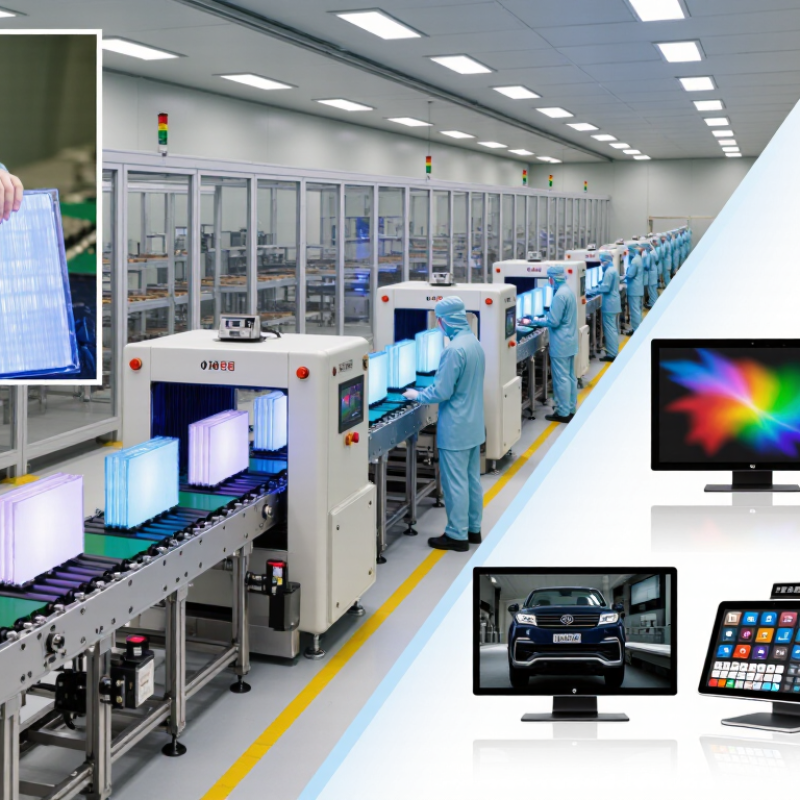
What Defines a Leading LCD Screen Manufacturer in China?
What Defines a Leading LCD Screen Manufacturer in China?
China remains central to LCD production. An Omdia 2024 capacity review estimated that Chinese factories represented over 70% of global LCD capacity. Scale matters, but it does not prove quality. A leading manufacturer should show stable yield data, clear process controls, and repeatable color performance. Buyers should request brightness tolerance, contrast results, viewing-angle tests, and failure rates from recent production lots.
Engineering depth is equally important. Experienced suppliers can adjust interface types, touch structures, backlight systems, and mounting designs. They should provide samples that match mass-production materials. ISO 9001 systems, incoming inspection records, and traceable serial data add practical reliability. According to the 2024 Global Display Equipment and Materials Report, panel makers continue investing heavily in advanced production and inspection equipment. This signals a tougher market, where measurement discipline separates serious factories from simple trading operations.
Tips: Ask for three sample rounds, not one. Compare panels under identical lighting. Request aging-test photos, carton-drop results, and a written replacement policy. A low quotation may hide weaker glass or unstable backlights. No factory is flawless. Even strong suppliers can miss a deadline or report imperfect uniformity. That is why transparent corrective-action records matter more than polished showroom claims. During evaluation, check communication speed, engineering questions, and after-sales ownership. These details often predict the real buying experience better than capacity figures.
How China’s LCD Manufacturing Industry Serves Global Buyers
China Best LCD Screen Manufacturer for Global Buyers?
How China’s LCD Manufacturing Industry Serves Global Buyers
China’s LCD manufacturing industry serves buyers through mature production networks and flexible engineering teams. Factories can produce panels, touch displays, and complete screen assemblies. Many suppliers support custom sizes, brightness levels, interfaces, and mounting designs. This helps equipment makers adapt screens to medical devices, vehicles, kiosks, and industrial controls.
Practical experience matters here. Reliable manufacturers usually inspect glass, backlights, driver boards, and finished displays separately. They test brightness uniformity, viewing angles, touch response, and operating temperature. Buyers should request samples before approving mass production. A sample may look perfect. The next batch still needs inspection. Production variation remains a real concern, especially with unusual specifications.
Communication also affects delivery. Experienced suppliers provide drawings, test reports, packing details, and production schedules. They can arrange export packaging with corner protection and moisture control. Clear technical files reduce errors between engineers, purchasing teams, and factories. Some suppliers accept smaller trial orders, although pricing and lead times may be less attractive. That is often reasonable for new projects. A careful buyer should verify factory capacity, quality procedures, and response speed before signing a long-term agreement. Factory visits help, but they cannot replace independent testing. The process is efficient, yet not flawless.
Which LCD Screen Types and Applications Are Available?
China-based LCD manufacturers serve global buyers with several practical screen types. TFT LCDs suit control panels, kiosks, instruments, and embedded equipment. IPS panels provide wide viewing angles and stable colors. They work well in medical monitors, design terminals, and public information displays. VA panels deliver deeper contrast for indoor entertainment and commercial screens.
TN LCDs remain useful where fast response and lower cost matter. Monochrome LCDs fit meters, thermostats, and simple industrial devices. Transflective screens perform better in changing light, including handheld tools and outdoor instruments. Touch displays can combine projected capacitive or resistive input with the LCD module. Size, resolution, interface, brightness, and operating temperature require careful matching.
Application details often decide the correct structure. A factory panel may need gloves, dust resistance, and a wide temperature range. A vehicle display may require sunlight readability, vibration testing, and stable viewing angles. Optical bonding can reduce reflections, but it may increase cost and repair difficulty. A brighter screen is not always better; it can create heat and shorten component life. I have seen projects fail because engineers selected resolution before checking power limits. Prototype testing should include long-hour operation, repeated touch input, and actual lighting conditions. Documentation, inspection records, and consistent sample approval also help buyers evaluate a supplier’s reliability.
How to Evaluate Quality, Certifications, and Customization Options
For global buyers, LCD quality starts with measurable evidence, not a polished sample. Omdia’s 2024 Display long-term demand forecast expects LCD to retain over 90% of large-area display shipments through 2031. That scale makes supplier discipline more important. Ask for luminance uniformity, dead-pixel limits, contrast, response time, and temperature-cycle results. Request raw inspection records, not only a pass certificate. A bright sample can hide defects. I would test ten units from one batch, then repeat after shipping simulation.
Certifications should match the destination and product use. ISO 9001 supports process control, while IEC 62368-1 addresses safety for applicable equipment. RoHS and REACH documents should identify material controls and testing laboratories. However, certificates can be outdated, incomplete, or issued for another model. Check certificate numbers, scope, validity dates, and factory address. This small check prevents expensive doubt. Independent testing is stronger when reports include serial numbers and measured limits.
Customization needs a written engineering matrix. Specify panel size, resolution, brightness, viewing angle, cover-glass thickness, interface, touch method, and operating temperature. Display Supply Chain Consultants’ 2024 supply-chain analyses highlight continued LCD investment and substantial installed capacity. Capacity does not equal stable customization. Confirm tooling ownership, sample approval, firmware control, MOQ, lead time, and change-notification rules. I have seen projects fail because a connector changed quietly. Leave room for revision. A reliable manufacturer welcomes controlled mistakes during validation, before mass production.

