Get an estimate

Top Aluminum Composite Panel Exporters for Global Buyers

Global buyers are reassessing façade materials as energy costs, fire safety, and embodied carbon shape construction decisions. Aluminum composite panels remain attractive because they combine a lightweight core, smooth finishes, and efficient installation. The International Aluminium Institute reported global primary aluminum production above 70 million tonnes in 2023, confirming the scale of the supply ecosystem behind architectural products. However, volume does not guarantee quality.

A reliable Aluminum Composite Panel Exporter should provide verifiable fire-test classifications, consistent panel thickness, alloy specifications, coating warranties, and traceable production records. Reports from Grand View Research and MarketsandMarkets identify construction and architectural applications as major demand drivers, while also noting stronger interest in recyclable and low-maintenance materials. These findings matter at the loading dock. A buyer should inspect edge bonding, protective film, pallet stability, and moisture protection before approving shipment.

As architect and materials researcher Thomas Heatherwick has said, “Materials are not just about what they look like; they are about what they do.” His observation is useful here. Exporters must connect appearance with tested performance. Still, market forecasts are not guarantees. Regional standards, project conditions, and installation quality can change the final result. This guide compares leading exporters through documented certifications, manufacturing experience, technical support, export reach, and after-sales responsiveness. The strongest supplier may not offer the lowest quotation. Sometimes, the cheaper panel creates the most expensive lesson.
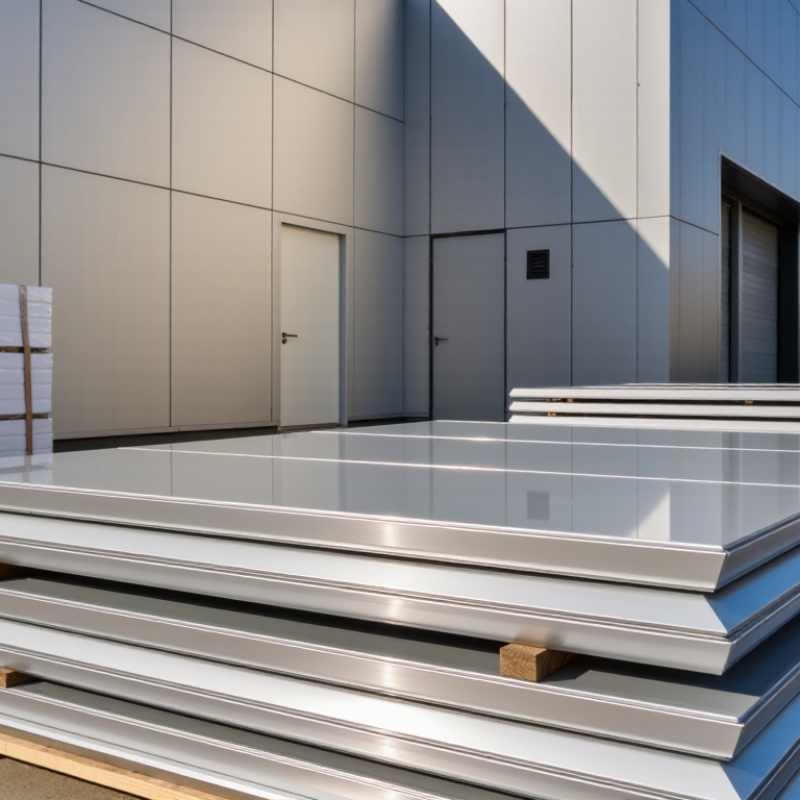
Top Aluminum Composite Panel Exporters for Global Buyers

What Aluminum Composite Panels Are and Why Global Buyers Choose Them

Aluminum composite panels are lightweight sandwich materials. They usually combine two thin aluminum skins with a polymer or mineral-filled core. This structure creates a flat, rigid sheet without the weight of solid metal. A 2024 global market analysis estimated the sector at more than USD 6 billion, with construction remaining its largest application. The figure varies by research method, so buyers should check definitions carefully.

Global buyers choose these panels for practical reasons. Their smooth surfaces support clean facades, sign systems, partitions, and interior wall applications. Standard sheets commonly measure around 1,220 millimeters wide, reducing cutting waste on many projects. Aluminum also resists corrosion better than ordinary steel in humid environments. However, “weather-resistant” does not mean maintenance-free. Edges, joints, fasteners, and sealants still need disciplined installation.

Fire performance requires closer attention. A 2023 industry safety review found that mineral-filled cores generally provide stronger fire resistance than standard polymer cores. Buyers should request tested classifications under EN 13501-1 or ASTM E84, not rely on marketing language. Life-cycle studies also report lower transport emissions than heavier facade materials, although results depend on recycled content and shipping distance. One weakness remains easy to overlook: thin panels can dent under impact. Careful packaging and site handling matter. For international purchasing, verified thickness, core composition, coating warranty, test reports, and dimensional tolerances are more useful than a low initial price.

Key Standards for Evaluating Aluminum Composite Panel Exporters

Top Aluminum Composite Panel Exporters for Global Buyers

Evaluating an aluminum composite panel exporter requires more than comparing prices. Request technical datasheets, material declarations, and recent fire-test reports. Check whether test results match the proposed panel thickness, core type, coating, and production batch. Standards differ by market, so confirm applicable requirements before placing an order. A report without traceable laboratory details is weak evidence.

Reliable exporters explain their quality controls clearly. Look for incoming aluminum inspection, coating-thickness checks, flatness measurements, and peel-strength testing. Ask for sample panels from current production, not only showroom pieces. Examine the surface under angled light. Small color differences can become obvious across a large façade. Batch coding matters. It supports investigation when defects appear after delivery.

Export capability also depends on practical discipline. Verify packing methods, moisture protection, pallet strength, and container loading records. Request realistic lead times and written procedures for damaged goods. Strong exporters provide responsive technical communication and consistent documents. However, no supplier is flawless. Delayed replies or incomplete certificates should not be ignored, even when samples look excellent. Buyers should compare independent evidence, inspect production when possible, and record every agreed specification. A low quotation may conceal weaker coating durability, limited traceability, or costly replacement work. Reliability is demonstrated through repeatable performance, not polished claims.

Major Export Regions and Their Manufacturing Strengths

Top Aluminum Composite Panel Exporters for Global Buyers

East Asia remains the largest production center for aluminum composite panels. China benefits from extensive aluminum rolling capacity, dense supplier networks, and efficient container logistics. The International Aluminium Institute reported global primary aluminum production near 70.6 million tonnes in 2023. China contributed more than half of that volume. This scale supports competitive panel pricing and broad core-material choices. However, volume does not always prove consistent quality.

Europe emphasizes engineering control, fire performance, and architectural surface finishing. Germany, Italy, and neighboring manufacturing regions serve demanding construction markets. Eurostat data shows the European Union remains a major exporter of aluminum sheets and plates, although these categories include products beyond composite panels. Their production strength often appears in tighter thickness tolerances, stable coatings, and detailed technical documentation. Middle Eastern exporters benefit from nearby smelters, modern industrial zones, and access to Gulf, African, and South Asian markets. Turkey adds a useful bridge between European and regional supply chains.

Tips: Ask for recent batch reports, coating thickness records, and core-composition declarations. Compare export statistics carefully. UN Comtrade classifications often group composite panels with broader aluminum products. Request samples from different production lots. A glossy sample can hide uneven bonding. Freight distance matters, too; a lower factory price may lose its advantage after inland transport and port handling. Buyers should also review fire-test validity for the exact panel structure, not a similar model. Mistakes happen here. Good sourcing requires verification, not impressive brochures.

Top Aluminum Composite Panel Exporters for Global Buyers

Major export regions and their manufacturing strengths

The chart uses 2023 primary aluminum production estimates as a brand-free indicator of upstream manufacturing depth in major export hubs. East Asia provides the largest material base, while the Gulf region benefits from large-scale, energy-intensive smelting. North America, Northern Europe, and Oceania are associated with established industrial infrastructure, quality control, and reliable logistics. Primary aluminum production is an upstream proxy and does not represent aluminum composite panel export value directly.

Source: U.S. Geological Survey, Mineral Commodity Summaries 2024, Aluminum, 2023 estimated production; values rounded in million metric tonnes.

How to Compare Exporter Quality, Pricing, and Customization Options

Exporters should be compared through evidence, not polished product photos. The International Aluminium Institute reported global primary aluminium production above 70 million tonnes in 2023. That scale creates broad supply choices, but not consistent panel quality. Request recent mill certificates, coating thickness records, core composition, and batch-level inspection photos. Check whether tests cover fire performance, wind pressure, impact resistance, and color stability. Standards such as EN 13501-1, ASTM E84, and ISO 9001 can guide verification, but certificates still need independent confirmation.

Price needs a landed-cost calculation. Include panel price, protective film, packaging, inland transport, freight, insurance, duties, and replacement risk. A low quote can look brilliant. It may exclude testing or stronger alloy skins. Industry market research from Grand View Research estimated the aluminum composite panel market at several billion US dollars in 2023, with continued growth expected through 2030. Growing demand can improve factory utilization, yet it may also encourage rushed production during peak seasons. Ask for a firm lead time and a realistic tolerance statement.

Customization separates a trading desk from a capable exporter. Confirm panel thickness, aluminum alloy, paint system, core type, fire rating, gloss level, color matching, perforation, bending radius, and cutting accuracy. Request a physical sample, not only a digital color chart. For large projects, approve a reference panel before mass production. I would also compare warranty terms carefully; vague wording often hides exclusions. One practical weakness remains: sample quality may exceed shipment quality. Independent pre-shipment inspection is therefore worth budgeting.

Top Aluminum Composite Panel Exporters for Global Buyers - How to Compare Exporter Quality, Pricing, and Customization Options
Anonymous Exporter Profile Typical Supply Region Common Panel Specifications Core Options Surface Finishes Indicative Export Price* Typical MOQ Standard Lead Time Quality & Compliance Indicators Customization Capability Best Fit for Buyers
Profile A East Asia 1220–1575 mm width
2440–6000 mm length
3–6 mm total thickness
PE core FR core Mineral core Solid colors, metallic, brushed, mirror, wood grain, stone texture, high gloss and matte US$8–22/m² 500–1,000 m² 20–35 days ISO 9001 quality systems commonly available; request fire-test and coating reports for each project Very high Large-volume projects, broad color ranges and private-label packaging requirements
Profile B South Asia 1220–1575 mm width
2440–6000 mm length
3–6 mm total thickness
PE core FR core PVDF-painted, PE-painted, brushed, wood-effect and standard solid colors US$8.50–23/m² 300–800 m² 25–45 days Coating thickness, adhesion and flatness should be verified through pre-shipment inspection High Cost-sensitive orders requiring moderate customization and flexible batch sizes
Profile C Western Europe 1250–1500 mm width
2500–6000 mm length
3–6 mm total thickness
FR mineral core A2 non-combustible core PVDF, FEVE, anodized-look, metallic, matte and architectural custom colors US$24–55/m² 500–1,500 m² 35–60 days Strong documentation culture; EN 13501-1 fire classification and project-specific declarations may be available High High-rise façades, public buildings and projects with strict technical documentation
Profile D Türkiye and nearby markets 1220–1500 mm width
2440–6000 mm length
3–6 mm total thickness
PE core FR core Mineral core Solid, metallic, wood, marble, brushed and custom digital-print finishes US$11–30/m² 500–1,000 m² 25–45 days Ask for EN 13501-1, ASTM E84 or local-market fire documentation where required High European, Middle Eastern and North African buyers seeking regional logistics advantages
Profile E East Asia, premium segment 1220–1575 mm width
2440–6000 mm length
3–6 mm total thickness
FR mineral core A2 core PVDF, FEVE, anodized, nano-surface, metallic and high-durability architectural finishes US$20–48/m² 500–1,000 m² 30–55 days Detailed technical submittals, batch traceability and third-party testing are commonly offered Very high Premium façades, long-service-life applications and technically demanding tenders
Profile F Gulf region 1220–1575 mm width
2440–6000 mm length
3–6 mm total thickness
PE core FR core UV-resistant solid colors, metallic, stone, wood and heat-reflective finishes US$10–28/m² 300–1,000 m² 20–40 days Confirm UV resistance, coating warranty, thermal performance and fire classification for hot climates Medium–high Commercial façades, signage, fit-out and projects requiring short regional delivery routes
*Indicative export prices are benchmark ranges for standard aluminum composite panels and may vary by aluminum alloy, skin thickness, coating system, fire rating, order volume, Incoterms, packaging and destination. Before purchase, compare coating thickness, aluminum alloy and thickness, peel strength, flatness, color tolerance, fire classification, warranty terms, inspection procedures and shipping costs using the same specification.

Essential Steps for Selecting and Working With a Reliable Exporter

Top Aluminum Composite Panel Exporters for Global Buyers

Essential Steps for Selecting and Working With a Reliable Exporter

Selecting a reliable aluminum composite panel exporter requires evidence, not polished catalogs. Request factory registration, production capacity, recent project references, and independent test reports. Check panel thickness, aluminum alloy, coating thickness, peel strength, flatness, and color tolerance. For building projects, verify fire classification through recognized EN or ASTM testing. Ask for batch-level certificates and retained samples. A glossy sample is not proof.

The World Bank’s Logistics Performance Index 2023 covered 139 economies and assessed customs, infrastructure, shipment reliability, tracking, and delivery timeliness. Use these factors when comparing exporters and freight partners. UNCTAD’s Review of Maritime Transport 2024 reported that maritime trade grew 2.4% in 2023, while route disruptions increased shipping uncertainty. Request an Incoterms 2020 quotation, clear HS-code details, loading photos, seaworthy packaging specifications, cargo insurance, and a written delay procedure.

Before payment, arrange third-party inspection during production and before container sealing. Compare the inspection report with the approved sample, not only the sales contract. Confirm moisture protection, corner guards, pallet strength, and container loading records. Communication matters too. A dependable exporter answers technical questions consistently and corrects documents quickly. I would still avoid choosing the cheapest offer. Price comparisons often miss coating warranties, replacement terms, and port charges. One weakness in my own process is relying too heavily on documents; a live factory audit can reveal storage problems that paperwork hides.