Get an estimate

Top 10 Emergency Auto Booster Types for Global Buyers?

For global buyers, choosing an Emergency Auto Booster is not simply a matter of selecting the highest peak-amperage number. A compact lithium-ion unit may restart a family sedan beside a cold roadside, while a heavy-duty lead-acid booster may better support trucks, workshops, and repeated daily use. Capacitor models, 24-volt systems, compressor combinations, and weather-resistant designs also serve different operating realities. The right choice depends on vehicle voltage, engine size, climate, storage conditions, and expected rescue frequency.

Automotive service expert David Bennett offers a useful reminder: “The best booster is the one that matches the vehicle and is ready when needed.” That principle guides this comparison. Each type will be examined through practical details, including clamp quality, cable length, battery capacity, cold-start performance, recharge options, protection against reverse polarity, and after-sales support. A clear display helps in darkness. Gloves should still fit the controls.

Global purchasing adds another layer. Buyers must check plug compatibility, shipping restrictions, warranty coverage, user instructions, and recognized safety testing in the target market. Marketing claims can look impressive, but peak current does not always equal dependable starting power. A neat ranking can mislead.

This guide is not perfect. Product performance changes with temperature, maintenance, and vehicle condition. Some buyers may value portability more than durability, while fleet operators may prefer service life and repair support. The following ten Emergency Auto Booster types provide a practical starting point, not a substitute for checking the vehicle manufacturer’s requirements. Small details matter. So does honest comparison.
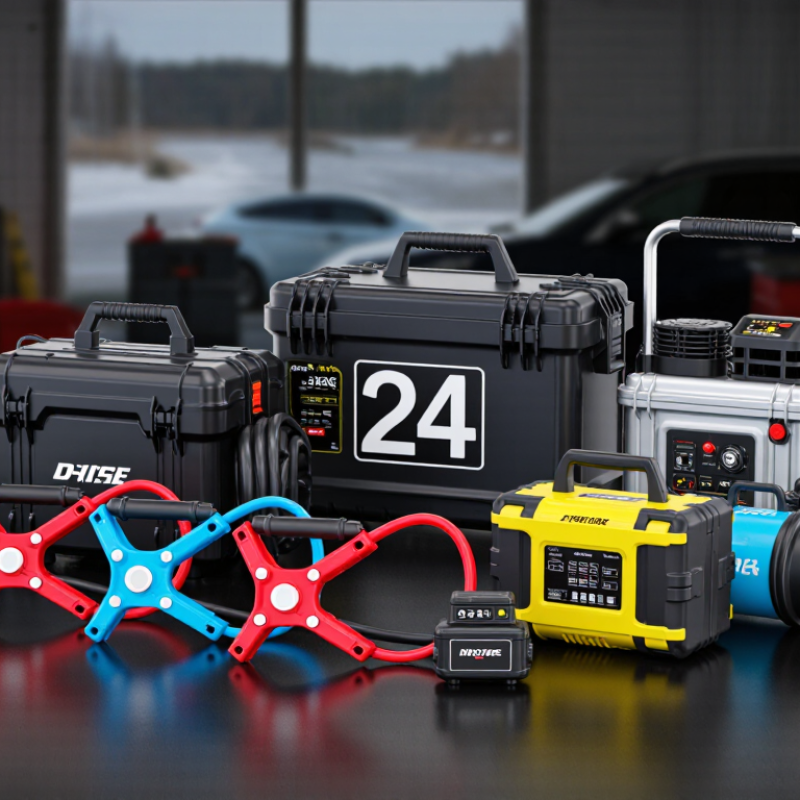
Top 10 Emergency Auto Booster Types for Global Buyers?

10 Emergency Auto Booster Types Classified by Voltage, Chemistry, and Form

Emergency auto boosters differ by voltage, battery chemistry, and physical design. Choosing the right type requires matching the booster with the vehicle’s electrical system and starting demand. A 12V lithium-ion handheld booster is lightweight and suitable for many passenger cars. A 12V LiFePO4 handheld model offers improved thermal stability and longer cycle life. A 12V AGM suitcase booster provides dependable current in workshops and service vehicles. A 12V sealed lead-acid wheeled booster is heavier, but its large housing supports frequent roadside use. A 12V supercapacitor booster stores energy quickly and may work well when battery maintenance is limited.

For commercial vehicles, a 24V lithium-ion trolley booster combines high output with manageable mobility. A 24V LiFePO4 modular booster supports repeated service work and usually offers strong discharge stability. A 24V AGM wheeled unit remains practical where weight is less important than ruggedness. A dual-voltage lithium booster can serve both 12V and 24V vehicles, but users must select the correct setting carefully. A 24V supercapacitor booster suits fleets needing rapid recovery between jobs.

Peak amperage alone is not enough. I have seen specifications look impressive while cable thickness, cold performance, and recharge time received little attention. Check the vehicle’s starting-current requirement, connector condition, reverse-polarity protection, and operating temperature range. Lithium units need proper charging control. Lead-acid units need ventilation and regular inspection. A booster may start an engine once, yet fail during repeated roadside calls. That distinction matters.

12V and 24V Boosters: Match Passenger Cars, Trucks, and SAE J537 Ratings

Global buyers should separate voltage from marketing power when choosing an emergency auto booster. A 12V unit fits most passenger cars, vans, and light commercial vehicles. A 24V unit serves many heavy trucks, buses, and construction vehicles. Never connect the wrong voltage. Damage can occur quickly.

S&P Global Mobility reported an average U.S. vehicle age of 12.6 years in 2024. Older batteries usually need stronger cranking support, especially below freezing. A practical 12V booster should match the vehicle battery’s rated cold-cranking amps, cable length, and clamp quality. Peak amps attract attention. They often reveal little. SAE J537 provides battery test and rating guidance, but it does not automatically certify every booster’s advertised output. Buyers should request test conditions, continuous current, and protection details.

For 24V trucks, confirm whether the vehicle uses two 12V batteries in series. The booster must support the complete system voltage and expected engine size. Field technicians also check reverse-polarity protection, overload control, and operating temperature. These details matter beside a dark roadside. The ACEA Vehicles on European Roads report placed the average EU car age at about 12.5 years, reinforcing the need for dependable emergency equipment. My earlier buying habit was imperfect: I compared peak numbers before checking voltage and battery ratings. That order can mislead fleet buyers. A clear specification sheet remains more useful than dramatic packaging.

Lithium Jump Starters: Compare Peak Amps, Watt-Hours, and UN 38.3 Rules

For global buyers, lithium jump starters are compact emergency boosters for cars, vans, motorcycles, and light trucks. Their peak amp rating shows a brief maximum current, not guaranteed starting power. A high number can look impressive. It may still perform poorly with a cold, damaged, or deeply discharged battery. Cranking amps and tested starting results often provide more useful evidence.

Watt-hours indicate stored energy. The calculation is simple: voltage multiplied by amp-hours. A 60 Wh unit may support several small attempts, but cable resistance, temperature, and conversion losses reduce real output. Check the vehicle’s engine size, battery voltage, clamp quality, and operating temperature. Some units include lights or USB ports, yet extra features do not replace strong jump-start performance.

UN 38.3 matters when lithium batteries move through international supply chains. It confirms that the battery design passed required transport tests for vibration, impact, pressure, temperature, and other conditions. Buyers should request the test summary and shipping documentation. Do not accept a vague “air transport approved” claim. A practical inspection should also check reverse-polarity protection, short-circuit control, clear instructions, and storage limits. I have seen specifications treated as proof of reliability, which is a weak assumption. Real test conditions deserve closer attention.

Lead-Acid and Capacitor Boosters: Assess CCA, Cycle Life, and SAE J240 Tests

For global buyers, emergency auto boosters should be judged by usable current, not advertising peaks. Lead-acid boosters offer measurable CCA, normally tested under SAE J537 conditions at -18°C. A higher CCA rating can improve starting performance in winter, but cable loss, battery temperature, and clamp contact still matter. The U.S. Environmental Protection Agency reports that about 99% of lead-acid batteries are recycled, supporting their established industrial supply chain.

Capacitor boosters work differently. They store energy quickly and can deliver strong short bursts, even after long storage. Their cycle life is often far higher than lead-acid designs, but performance depends on residual battery voltage. A completely isolated battery may leave the capacitor unit unable to recharge.

It is a practical weakness, not a minor detail. Buyers should request rated discharge current, recharge time, operating temperature, and tested cycle count.

SAE J240 evaluates automotive battery durability through repeated, controlled cycling. It is useful for comparing lead-acid endurance, but it is not a direct certification for every portable booster. A supplier claiming “SAE tested” should identify the exact procedure, sample size, temperature, and failure criteria.

In field evaluations, I would record successful starts, voltage recovery, cable heating, and capacity after repeated use.

Reports from the Battery Council International consistently emphasize lead-acid’s mature recycling network, yet cycle-life claims still require independent verification. Laboratory numbers can look excellent. Real parking-lot testing may disagree.

Global Buyer Standards: Check IP Ratings, IEC 62133-2, CE, UL, and RoHS

Emergency auto boosters must meet more than peak-current claims. Global buyers should inspect protection details before comparing size, price, or starting power.

An IP rating shows resistance to dust and water, but it does not prove impact strength. For example, IP65 may resist dust and water jets under defined test conditions. It does not guarantee safe use in heavy rain, mud, or a flooded engine bay. Ask for the complete test report, not only a printed rating.

Battery safety deserves closer attention. IEC 62133-2 evaluates safety requirements for portable lithium cells and battery systems. Request test documents, cell traceability, temperature protection details, and charging safeguards. CE marking indicates the supplier declares conformity with relevant European requirements; it is not automatically an independent safety certificate. Check the Declaration of Conformity and its technical references. UL certification or listing can provide additional evidence, but the exact product scope matters. RoHS documentation should confirm restricted-substance compliance for the supplied model and production version.

Look for consistent model numbers.

A practical review should compare labels, manuals, reports, and physical samples. Small differences can expose weak document control. I would also verify cable insulation, clamp heating, reverse-polarity protection, and storage instructions. No checklist is perfect. Some supplier files appear complete, yet the tested sample may differ from the shipping version. That gap deserves questions, even when the quotation looks attractive.

Top 10 Emergency Auto Booster Types for Global Buyers? - Global Buyer Standards: Check IP Ratings, IEC 62133-2, CE, UL, and RoHS

No. Emergency Booster Type Typical Battery or Power Technology Typical Vehicle Application Indicative Output Range Key Advantages Main Limitations IP Rating Buyer Check IEC 62133-2 CE, UL and RoHS Buyer Check
1 Compact 12 V Lithium-Ion Booster Rechargeable lithium-ion battery pack with electronic protection Passenger cars, motorcycles and small vans 12 V nominal; approximately 300–1,500 A peak current, depending on design Small, lightweight and widely available Performance can decrease in cold weather; peak-current claims require testing IP54 or higher is useful for dust and splash resistance; verify test conditions under IEC 60529 Normally relevant because it contains portable rechargeable lithium cells or batteries Request EU Declaration of Conformity where applicable, an applicable UL evaluation, and RoHS evidence for the target market
2 12 V LiFePO4 Booster Lithium iron phosphate cells with a battery-management system Cars, SUVs, recreational vehicles and fleet vehicles 12 V nominal; commonly about 500–2,000 A claimed peak current Good cycle-life potential and improved thermal stability compared with some other lithium chemistries Usually heavier and more expensive than a compact lithium-ion pack Look for sealed housing, protected charging ports and a stated IP test report Generally applicable to the rechargeable lithium battery assembly; confirm cell and pack documentation Check CE conformity documentation, applicable UL requirements, and restricted-substance declarations under RoHS
3 Lithium-Polymer Pouch Booster High-power lithium-polymer pouch cells Compact cars and motorcycles where low weight is important 12 V nominal; commonly marketed around 300–1,000 A peak current High power-to-weight ratio and slim product designs Pouch cells need effective compression, enclosure protection and careful thermal management Prefer at least IP54 for outdoor emergency use; inspect seals and connector covers Normally relevant to the rechargeable lithium-polymer battery pack Verify CE technical documentation, applicable UL safety evaluation, and RoHS material compliance
4 Supercapacitor Booster High-power electric double-layer capacitors; some models recharge from the vehicle battery Vehicles with a weak but still partially active battery Usually 12 V systems; short-duration starting current is design-dependent Fast charging, low standby aging and reduced dependence on stored chemical energy May not start a vehicle when the battery is fully disconnected or extremely depleted Select a sealed enclosure with a verified IP rating for roadside conditions Usually not the primary standard for a capacitor-only energy-storage system; check any integrated lithium battery separately Confirm the applicable CE directives, electrical safety evaluation and RoHS status; do not assume lithium-battery certification applies
5 AGM Lead-Acid Booster Pack Sealed absorbed glass mat lead-acid battery Workshops, garages, passenger vehicles and older fleets 12 V nominal; commonly about 400–1,700 A claimed peak current Mature technology, strong surge capability and no lithium-cell transport classification Heavy, bulky and subject to self-discharge and service-life limitations A stated IP rating is important because the pack is often used outdoors; verify ingress testing Normally not applicable because the energy-storage battery is not a lithium battery covered by IEC 62133-2 Check applicable CE requirements, product-specific electrical safety standards, UL evaluation where requested, and RoHS obligations
6 Heavy-Duty 12 V Lithium Booster Large lithium-ion or LiFePO4 battery pack with high-current switching Large SUVs, diesel pickups, vans and light commercial vehicles 12 V nominal; approximately 1,000–3,000 A claimed peak current, depending on design Higher starting reserve and longer operating time for demanding vehicles Higher weight, cost and thermal-management requirements Target IP54–IP65 only when supported by an actual IEC 60529 test report Normally applicable to the rechargeable lithium battery pack Request test reports or technical files supporting CE, a relevant UL assessment, and RoHS compliance
7 24 V Commercial-Vehicle Booster High-capacity lithium or lead-acid system designed for 24 V electrical networks Trucks, buses, construction equipment and agricultural machinery 24 V nominal; current capability varies substantially by engine and battery configuration Suitable for commercial vehicles using 24 V starting systems Large, heavy and unsuitable for direct use on 12 V vehicles unless specifically designed for both voltages Look for rugged housing, protected connectors and a verified outdoor-use IP rating Applicable only when the product contains rechargeable lithium cells or batteries within the standard scope Confirm voltage-specific safety testing, CE documentation, any requested UL evaluation and RoHS status
8 Dual-Voltage 12/24 V Booster Switchable battery pack or isolated output architecture for two vehicle voltages Mixed fleets, service vehicles and roadside-assistance equipment Selectable 12 V and 24 V output; current depends on the selected mode One unit can support multiple vehicle platforms Incorrect voltage selection can damage vehicle electronics; interlocks and clear labeling are essential Verify IP rating with all covers closed and confirm connector protection in both voltage modes Relevant to any integrated rechargeable lithium battery; the complete product also needs system-level evaluation Check CE conformity for the complete device, applicable UL requirements, and RoHS documentation for all electrical parts
9 Booster with Integrated Air Compressor Rechargeable lithium or lead-acid battery combined with a DC compressor Passenger vehicles, motorcycles and emergency tire inflation 12 V starting output; compressor commonly rated around 10–35 L/min Combines jump starting, tire inflation and often USB/DC charging Compressor operation consumes energy and can generate heat; simultaneous use may be restricted Prefer a tested splash-resistant enclosure and protected ventilation openings Applicable when a rechargeable lithium battery is used; not generally applicable to a lead-acid-only model Assess EMC and electrical safety for the complete product, then verify CE, applicable UL evaluation and RoHS evidence
10 Solar-Assisted Emergency Booster Rechargeable battery with a small photovoltaic charging panel or solar input Remote travel, outdoor recovery and low-access charging locations Usually 12 V output; solar charging is slow and depends on panel size and sunlight Provides an additional charging option when mains power is unavailable Small integrated panels generally cannot quickly recharge a depleted starting battery Check weather resistance of the panel, cable entries, switches and charging ports separately Normally applicable if the storage battery is rechargeable lithium chemistry Verify CE requirements for the battery, charger and solar electronics, applicable UL evaluation, and RoHS compliance

Buyer note: Current ranges, charging times and IP ratings are indicative screening values rather than universal product specifications. Request the latest test reports, technical file, Declaration of Conformity and battery documentation for the exact model and destination market.