Get an estimate

China Top 10 Refrigeration Fan Motor Manufacturers?

China’s refrigeration industry has become a major source of motors for cold rooms, display cases, condensing units, and commercial freezers. This article introduces ten leading Chinese manufacturers of Refrigeration Fan Motor products. It focuses on practical buying evidence, not promotional claims.

The evaluation considers motor efficiency, voltage options, airflow, operating temperature, noise, bearing quality, protection ratings, and production consistency. A reliable motor should start smoothly after long shutdowns. It should also withstand dust, moisture, vibration, and repeated defrost cycles. In a cold-storage room, a weak bearing can become a costly problem. The fan may sound rough before the temperature rises.

John A. Tomczyk, a respected refrigeration educator and technical author, offers a useful service principle: “Measure before replacing.” That advice matters here. Buyers should examine test reports, sample performance, warranty terms, and after-sales response. Factory certificates alone are not enough. A polished catalog cannot prove stable performance across every batch.

The manufacturers discussed in this guide are compared through product range, export experience, customization ability, quality control, and application support. Some specialize in compact shaded-pole motors. Others focus on EC motors, axial fan assemblies, or high-efficiency solutions. Their strengths are not identical.

No ranking is perfect. Application conditions vary. A motor suitable for a supermarket cabinet may fail in a high-humidity processing room. Therefore, readers should verify airflow requirements, mounting dimensions, frequency, insulation class, and actual ambient temperature before ordering. This guide aims to make that comparison clearer, more practical, and easier to question.
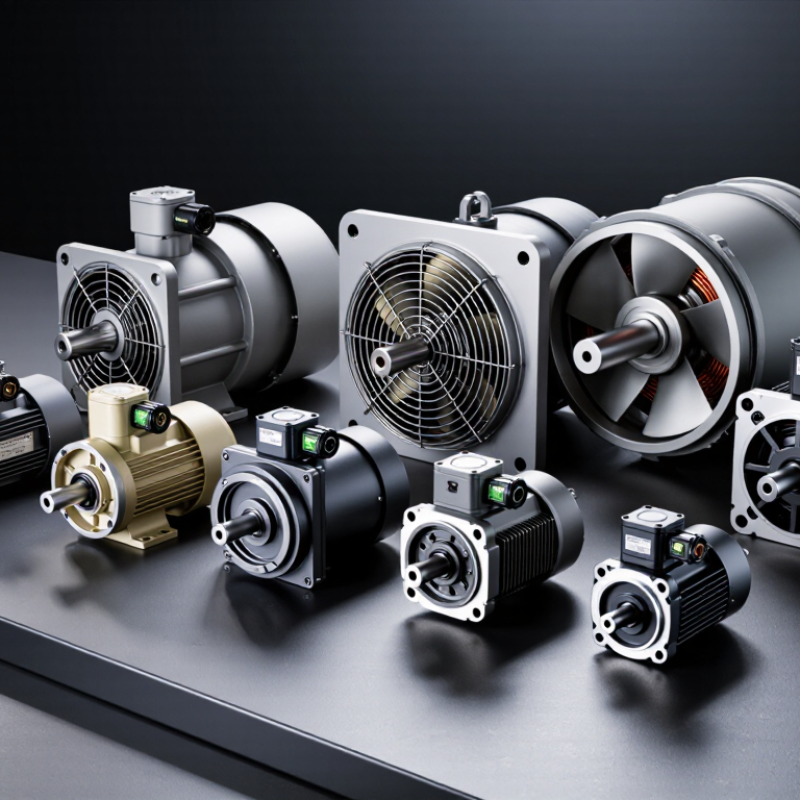
China Top 10 Refrigeration Fan Motor Manufacturers?

Definition and Role of Refrigeration Fan Motors

A refrigeration fan motor converts electrical energy into airflow across the evaporator or condenser coil. This airflow moves heat, stabilizes cabinet temperature, and protects compressor performance. Without it, cold air remains trapped, frost builds quickly, and energy use can rise.

The International Institute of Refrigeration estimates that refrigeration consumes about 17% of global electricity. This figure shows why small motor improvements matter. The motor’s efficiency, speed control, bearing quality, and airflow design directly influence system performance. In practical equipment checks, a noisy bearing or blocked grille often signals wasted energy. Electronic commutated motors can reduce losses, especially in systems requiring continuous operation. However, efficiency ratings alone do not tell the whole story. Incorrect blade matching can cancel the expected savings.

Tips: Check airflow direction before installation. Confirm voltage, frequency, rotation, and mounting size. Measure operating noise and surface temperature after running the unit. The U.S. Department of Energy’s commercial refrigeration standards also emphasize system-level energy performance, not isolated components. That approach is more reliable. A fan motor may look efficient on a test bench, yet perform poorly inside a crowded cabinet. Maintenance teams should clean coil surfaces, inspect wiring, and replace worn bearings early. This sounds basic. It is often overlooked.

Criteria for Ranking China’s Top Ten Manufacturers

China Top 10 Refrigeration Fan Motor Manufacturers?

Criteria for Ranking China’s Top Ten Manufacturers

Ranking refrigeration fan motor manufacturers requires more than measuring annual sales. The International Energy Agency’s The Future of Cooling report projects global cooling demand could triple by 2050. Motor efficiency will therefore affect both equipment costs and electricity use. Our assessment gives priority to verified efficiency, stable production, and long-term reliability.

Technical performance carries the highest weight. We examine compliance with IEC 60034-30-1 efficiency classes, starting torque at low temperatures, winding insulation, vibration, noise, and thermal endurance. Test records should be traceable, not simply presented in marketing sheets. ISO 9001 certification supports process control, while independent laboratory reports provide stronger evidence. Small details matter. A poorly balanced rotor can create costly cabinet vibration.

Production capability accounts for another major factor. We review monthly capacity, automated winding lines, incoming-material inspection, and defect rates over at least twelve months. Export experience, spare-parts availability, and response time also influence the ranking. The China Refrigeration and Air-Conditioning Industry Association’s industry data shows the importance of manufacturing scale, but scale alone is not proof of quality. A large supplier may still struggle with customized shafts or low-temperature starting. That is an uncomfortable limitation. Field feedback and customer audits should therefore adjust the score when published data appears incomplete.

China Top 10 Refrigeration Fan Motor Manufacturers? – Criteria for Ranking China's Top Ten Manufacturers

This chart presents a practical 100-point evaluation framework for comparing refrigeration fan motor manufacturers in China. The criteria emphasize product performance, manufacturing capability, quality control, energy efficiency, export readiness, and customer support. The percentages represent evaluation weights rather than company-specific results.

Profiles of China’s Ten Leading Refrigeration Fan Motor Makers

China’s refrigeration fan motor sector is expanding with demand for cold storage, supermarkets, data centers, and transport cooling. The 2024 Global Cooling Watch report projects cooling demand could more than triple by 2050 without stronger efficiency measures. The International Energy Agency also reports that motor-driven systems consume roughly half of global electricity. Efficiency matters.

A coastal manufacturer specializes in compact shaded-pole motors for display cabinets. An inland producer focuses on sealed motors for humid cold rooms. A third supplier develops EC motors with electronic speed control. Another serves commercial evaporators with low-noise assemblies. One maker emphasizes aluminum housings and lightweight installation. A separate factory produces high-temperature motors for defrosting environments. A northern company builds reinforced motors for large cold-storage condensers. Another supplier integrates thermal protection into small fan units. A ninth manufacturer targets customized voltage and frequency requirements. The tenth combines automated winding with endurance testing.

These profiles show different strengths, not identical leadership. Public rankings remain imperfect because private factories disclose limited sales data. That is worth questioning. Buyers should examine measured airflow, input power, noise, bearing life, and corrosion resistance. Test conditions can change the result. A motor rated at 40 watts may perform differently under restricted airflow or unstable voltage. Independent laboratory records, conformity documents, and field-service evidence provide stronger assurance than production claims alone. The best comparison uses the same fan blade, pressure range, ambient temperature, and operating hours. Data from the IEA and Global Cooling Watch supports this practical focus. Refrigeration efficiency is a system issue. The motor is only one part.

China Top 10 Refrigeration Fan Motor Manufacturers? - Profiles of China’s Ten Leading Refrigeration Fan Motor Makers

Rank Anonymized Manufacturer Primary Product Scope Common Motor Technologies Typical Power Range Typical Voltage / Frequency Typical Protection Typical Applications Export and Compliance Profile
1 Manufacturer Profile A Axial and external-rotor fan motors Single-phase asynchronous; EC options 10–750 W 110–480 V; 50/60 Hz IP44–IP55 Condensing units, evaporators, air-cooled condensers OEM supply; CE, RoHS, and selected UL-oriented models
2 Manufacturer Profile B Shaded-pole and small refrigerator fan motors Shaded-pole; PSC induction motors 3–45 W 100–240 V; 50/60 Hz IP20–IP44 Domestic refrigerators, compact freezers, display cabinets High-volume OEM production; CE and RoHS commonly available
3 Manufacturer Profile C EC and electronically commutated fan motors Brushless DC; sensorless EC designs 15–1,500 W 24–480 V; 50/60 Hz IP54–IP66 Energy-efficient HVAC, cold rooms, heat pumps, refrigeration racks Variable-speed control; CE, RoHS, EMC, and efficiency documentation
4 Manufacturer Profile D Industrial axial fans and condenser fan assemblies Three-phase induction; external-rotor motors 80–2,200 W 220–480 V; 50/60 Hz IP54–IP65 Commercial refrigeration, data-center cooling, industrial ventilation Custom impellers and mounting; CE and ISO-based quality systems
5 Manufacturer Profile E Compact motors for evaporator and freezer fans PSC; shaded-pole; reversible configurations 5–120 W 115–230 V; 50/60 Hz IP42–IP55 Reach-in freezers, refrigerated counters, supermarket cases Small-batch customization; common documentation includes CE and RoHS
6 Manufacturer Profile F Low-noise refrigeration and ventilation motors EC and low-vibration external-rotor motors 20–800 W 100–400 V; 50/60 Hz IP44–IP65 Hotel refrigeration, supermarket equipment, noise-sensitive HVAC Focus on acoustic testing, balancing, and variable-speed operation
7 Manufacturer Profile G Heavy-duty motors for cold-storage systems Three-phase induction; high-temperature winding systems 150–3,000 W 220–480 V; 50/60 Hz IP55–IP66 Cold-storage warehouses, blast freezers, industrial condensers Designed for continuous duty; export packaging and factory testing available
8 Manufacturer Profile H OEM fan motor assemblies and replacement units PSC; BLDC; shaded-pole replacement formats 5–500 W 100–240 V; 50/60 Hz IP20–IP55 Replacement parts, service distributors, commercial display equipment Broad dimensional compatibility; private-label and customized wiring options
9 Manufacturer Profile I Small-diameter axial fan motors Brushless DC; compact AC induction motors 2–100 W 12–230 V; 50/60 Hz IP20–IP55 Electronics cooling, compact refrigeration, portable cooling equipment Low-voltage options; customization for connectors, speed signals, and mounting
10 Manufacturer Profile J Specialized motors for refrigeration OEM projects AC induction; EC; application-specific motor designs 10–1,000 W 100–480 V; 50/60 Hz IP44–IP66 Refrigeration cabinets, condensing units, air handlers, heat-pump systems Engineering support, sample validation, and project-based OEM production

Note: Manufacturer names and brands are intentionally omitted. Electrical ratings, protection classes, and application ranges are representative published specifications commonly used in China’s refrigeration fan motor market; final values should be confirmed against the selected manufacturer’s current datasheet.

Comparison of Products, Technologies, and Manufacturing Capabilities

China’s top ten refrigeration fan motor manufacturers should be compared by measurable performance, not catalog size. The International Energy Agency reported in The Future of Cooling that global cooling energy demand could triple by 2050. This pressure favors efficient, durable motor designs. AC induction motors remain practical for basic condensers, while electronically commutated motors offer better speed control and lower operating losses. However, efficiency claims need test conditions.

Look for products rated under IEC 60034 procedures, with verified airflow, noise, temperature rise, and service life. A strong motor should start reliably at low temperatures and tolerate voltage variation. Hall sensors, sealed bearings, and integrated thermal protection improve field reliability. Some manufacturers provide 40,000-hour bearing targets, but independent endurance evidence is more valuable than a printed number. Small details matter: a 5°C winding increase can shorten insulation life.

Manufacturing capability separates serious suppliers from assembly-focused factories. Compare automated winding lines, rotor balancing accuracy, magnet bonding, burn-in testing, and traceability systems. ISO 9001 certification supports process control, but it does not guarantee quiet operation. The U.S. Department of Energy’s motor efficiency guidance also shows why part-load performance deserves attention. Ask for sample test reports, failure data, and production consistency across batches. A weakness remains: many comparisons overlook after-sales spare parts and controller compatibility. That can make an efficient motor expensive in practice.

How to Select a Suitable Chinese Refrigeration Fan Motor Supplier

How to Select a Suitable Chinese Refrigeration Fan Motor Supplier

China has many refrigeration fan motor manufacturers, but the largest supplier is not always the safest choice. The IEA’s The Future of Cooling reports that cooling already consumes about 10% of global electricity. UNEP’s 2023 Global Cooling Watch also projects cooling demand could more than triple by 2050. These figures make motor efficiency, durability, and service support increasingly important.

Start with the operating conditions, not the catalogue price. Confirm voltage, frequency, rotation, airflow, static pressure, noise, ambient temperature, and defrost exposure. Ask for performance curves at your actual working point. A motor rated for ordinary indoor use may fail inside a humid cold room. Check insulation class, IP protection, bearing design, winding materials, and expected service life. ASHRAE Handbook—Refrigeration provides useful guidance for matching components with refrigeration environments.

Audit the supplier’s process. Request sample test records, production traceability, incoming-material controls, and end-of-line inspection data. Verify efficiency and safety documentation through independent laboratories when possible. Factory experience matters here. Look for thermal-rise tests, vibration checks, locked-rotor protection, and repeated start-stop testing. A perfect datasheet does not guarantee a stable batch. I once saw a low-cost sample perform well, while later units showed inconsistent noise. That risk deserves a written corrective-action process, clear warranty terms, spare-part availability, and realistic lead times. Pricing still matters, but an apparently cheap motor can become expensive after installation.