Get an estimate

Top Keyless Entry Door Lock Suppliers for Global Buyers?

Choosing a Keyless Entry Door Lock supplier requires more than comparing prices on a product page. Global buyers need dependable hardware, clear specifications, and responsive technical support. A lock may look impressive in photographs, yet fail during repeated testing, humid storage, or unstable network conditions. This guide introduces leading suppliers and explains how their products serve residential, commercial, hospitality, and property management applications.

The evaluation considers manufacturing experience, product design, access methods, battery performance, software stability, and quality control. It also reviews fingerprint readers, PIN pads, RFID cards, mobile applications, and mechanical backup options. These details matter when a hotel manager needs quick access or a homeowner faces a low-battery warning at midnight. Reliable suppliers should provide test reports, installation drawings, warranty terms, sample orders, and practical after-sales assistance. Their factories should demonstrate consistent assembly, traceable components, and inspection procedures before shipment.

No supplier ranking is perfect. Buyer priorities differ. One importer may value private labeling, while another needs fast replacement parts and multilingual documentation. Certification claims should be verified against the destination market’s requirements. Communication quality also deserves attention, because unclear instructions can create costly installation mistakes. Based on supplier experience, product evidence, and buyer feedback, this overview helps readers build a more realistic shortlist. It does not promise a flawless choice. Instead, it highlights the questions that experienced purchasers ask before committing to volume orders. That reflection may prevent an attractive quotation from becoming an expensive problem.
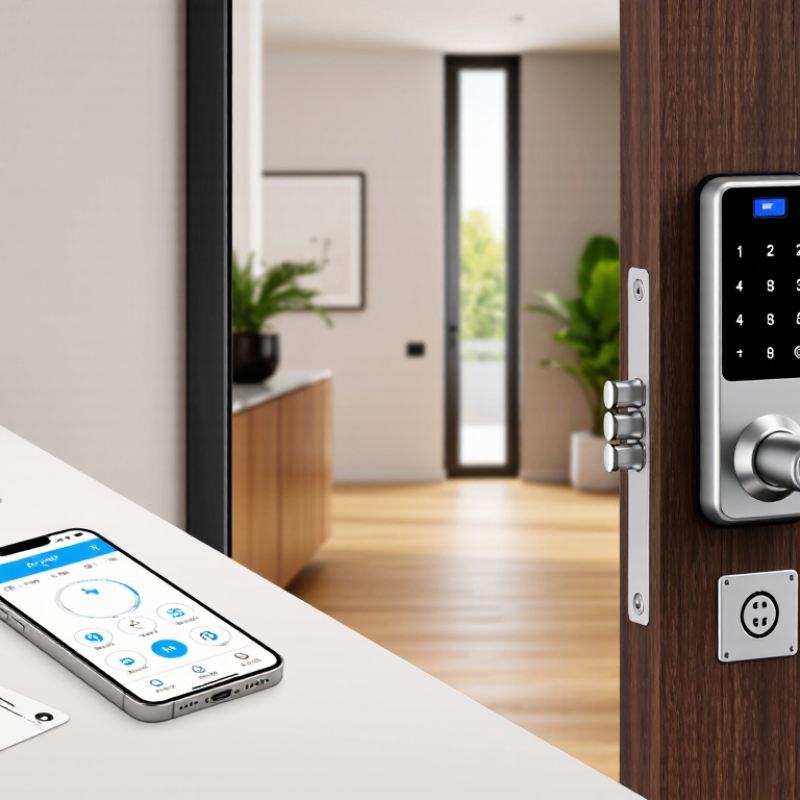
Top Keyless Entry Door Lock Suppliers for Global Buyers?

What Are Keyless Entry Door Locks and How Do They Work?

What Are Keyless Entry Door Locks and How Do They Work?

Keyless entry door locks replace a traditional key with an electronic authentication method. Users may enter a PIN, tap an RFID card, use NFC, connect through Bluetooth, or scan a fingerprint. The lock’s controller checks the credential, then activates a small motor that retracts or releases the deadbolt.

That is the mechanism.

Some models connect to Wi-Fi through a gateway, allowing remote access records and temporary permissions. Others work locally through Bluetooth, which usually reduces network exposure and battery use. Batteries still matter. A low-power warning, external emergency power contact, and mechanical backup can prevent a locked-out user. In field installations, door alignment is often more important than software features. A stiff latch can make a strong motor struggle.

Market data supports growing buyer interest. Fortune Business Insights valued the global smart lock market at about 2.55 billion US dollars in 2023 and projected a 13.5% compound annual growth rate through 2032. Grand View Research also identified residential and commercial access control as major growth areas.

These figures describe smart locks broadly, not every keyless lock.

Global buyers should check operating temperature, ingress protection, battery life, audit-log storage, and compatibility with local door dimensions. Compliance claims need verification against relevant regional standards. A supplier may promise “easy installation,” but that phrase can hide drilling, wiring, or gateway requirements. No lock is completely maintenance-free. Testing the override method before shipment is a small step, yet it is often overlooked.

Which Types of Suppliers Serve Global Buyers?

Global buyers usually work with four supplier types: direct manufacturers, OEM/ODM factories, regional distributors, and security-system integrators. Direct manufacturers suit large orders and stable product specifications. They can provide factory audits, production schedules, test reports, and spare-part plans. OEM/ODM suppliers offer customized finishes, packaging, firmware, or access methods. This flexibility helps property developers match local user habits. However, customization may increase development time and minimum order quantities.

Regional distributors keep inventory closer to the buyer. They often provide local-language support, replacement units, and installer networks. This can reduce delays when a lock fails at a hotel or apartment entrance. System integrators are valuable when locks must connect with intercoms, property software, or staff access systems. They normally handle site surveys, installation, user training, and maintenance. The service costs more, but poor installation can create false battery warnings or unreliable door alignment.

I have reviewed supplier proposals where impressive product photos hid weak technical details. Ask for battery-cycle data, emergency power methods, weather-resistance evidence, encryption descriptions, and compatibility lists. Request sample units before approving a container-sized order. Check whether the supplier can explain mechanical override procedures clearly. No supplier type is perfect. A factory may lack local support, while a distributor may offer limited customization. Buyers should compare response times, warranty handling, documentation quality, and testing records, not only unit price. Keep a written approval sample. Small differences in latch depth or mounting holes can become expensive field problems.

Top Keyless Entry Door Lock Suppliers for Global Buyers? – Which Types of Suppliers Serve Global Buyers?

Supplier Type Typical Product Range Best Fit for Global Buyers Typical MOQ Customization Capability Common Export Documentation Typical Lead Time Key Evaluation Points
OEM / ODM Manufacturers Fingerprint locks, PIN-code locks, RFID locks, Bluetooth locks, Wi-Fi-enabled locks, hotel locks and smart deadbolts. Importers, distributors, private-label programs and large property development projects. Commonly 100–1,000 units, depending on the product and packaging requirements. High. Housing design, firmware functions, packaging, logos, user manuals and app integration may be negotiable. Commercial invoice, packing list, bill of lading or air waybill, certificate of origin and product test reports when applicable. Approximately 30–60 days after approval of specifications and production samples. Factory audit, production capacity, quality-control process, firmware ownership, after-sales support and spare-parts availability.
Authorized Distributors Multiple categories of residential, commercial and hospitality access-control products from established manufacturers. Buyers requiring verified supply channels, mixed product orders and regional technical support. Often one carton or a small commercial order; requirements vary by distributor. Usually limited to packaging, configuration, access credentials and project-specific settings. Commercial invoice, packing list, warranty statement and manufacturer-related compliance documents. Approximately 3–15 business days when inventory is available; special orders may take longer. Stock availability, authorization status, warranty coverage, technical training and cross-border shipping capability.
Specialized Access-Control Integrators Electronic locks, access controllers, readers, management software, credentials and installation accessories. Hotels, offices, student housing, serviced apartments and multi-site commercial projects. Project-based rather than unit-based; pilot quantities are often used before full deployment. High at the system level, including user permissions, reporting, integration and installation design. Technical submittals, system architecture, installation manuals, commissioning records and standard shipping documents. Approximately 4–12 weeks, depending on system design, programming and site requirements. Interoperability, cybersecurity practices, local installation partners, service-level agreements and system scalability.
Hospitality Lock Suppliers RFID guest-room locks, mobile-key systems, energy-saving devices, encoder equipment and hotel access-management software. Hotels, resorts, serviced residences and hospitality management groups. Usually based on room count or project size rather than a simple retail quantity. Medium to high. Configuration, door types, credential formats and property-management integration may be supported. Room schedules, door compatibility data, integration documents, commissioning records and commercial export documents. Approximately 6–16 weeks for configured projects. Compatibility with hotel software, emergency access procedures, battery management, audit trails and local service coverage.
Commercial Hardware Wholesalers Keypad deadbolts, lever locks, cabinet locks, access readers and related door hardware. Hardware retailers, locksmiths, contractors and smaller commercial buyers needing readily available products. Commonly 1–20 cartons, subject to stock and wholesale policy. Low. Options generally focus on finish, cylinder format, packaging and product selection. Commercial invoice, packing list, warranty terms and basic product compliance information. Approximately 2–10 business days for stocked items. Inventory depth, compatibility with local door standards, replacement parts, return policy and shipment consolidation.
Online B2B Marketplaces A broad selection of factory-direct and trading-company offerings, including keypad, fingerprint, RFID and connected locks. Start-ups, small importers, product-testing programs and buyers comparing several manufacturing options. Frequently 10–100 units, although supplier policies differ widely. Ranges from low to high; customization must be confirmed directly with the supplier. Commercial invoice, packing list and shipping documents; compliance files should be requested and verified independently. Approximately 15–45 days, depending on production and logistics. Supplier verification, sample inspection, payment protection, response quality, dispute procedures and transparent specifications.
Regional Importers and Stocking Dealers Locally stocked residential and commercial smart locks selected for regional door dimensions, electrical standards and regulations. Buyers prioritizing short delivery times, local returns and installation support. Often one unit to several cartons, depending on the dealer. Low to medium. Configuration and installation packages are more common than hardware redesign. Local tax invoice, warranty documentation, user instructions and product conformity information required in the target market. Approximately 1–10 business days for stocked products. Local compliance, language support, replacement inventory, installer network and warranty response time.
Contract Manufacturers for Smart-Home Products Connected locks combined with gateways, sensors, mobile applications and broader smart-home product ecosystems. Technology companies, property platforms and private-label buyers seeking connected-product development. Commonly 500–5,000 units for customized programs, with pilot runs negotiated separately. Very high, including electronics, cloud connectivity, mobile apps, enclosure design and packaging. Technical files, radio testing documents where applicable, cybersecurity information, software release records and export documents. Approximately 8–20 weeks, including engineering and validation. Data security, software maintenance, cloud dependency, ownership of design files, connectivity standards and long-term support.
Buyer note: MOQ, pricing, certifications, lead times and export capabilities vary by supplier, destination market, door standard and product configuration. Global buyers should verify current technical files, applicable regional requirements, sample quality and warranty conditions before placing a purchase order.

How to Compare Leading Suppliers by Products and Services?

Choosing a keyless entry door lock supplier requires more than comparing product prices. Experienced buyers inspect the full product range, including keypad locks, fingerprint models, card systems, and connected options. Each type should suit the door material, traffic level, and installation environment.

Ask for clear specifications, wiring diagrams, battery details, and tested operating temperatures. Small details matter.

Supplier expertise becomes clearer during technical discussions. Can their team recommend a suitable lock for a metal gate or a busy apartment entrance?

Do they provide installation guidance, user manuals, replacement parts, and firmware support?

Reliable suppliers should explain access methods, emergency power options, data protection features, and maintenance needs without making vague promises.

Request sample units before placing a large order.

A sample may reveal loose buttons, weak hinges, or confusing instructions.

Service quality also affects the total cost. Compare response times, warranty terms, spare-part availability, training, and after-sales procedures.

Check whether quality inspections are documented and traceable. References from similar projects can show how the supplier performs after delivery.

Still, references are not proof of every capability. Product updates may change support quality, and even careful suppliers can miss a packaging issue.

Record these uncertainties and ask direct follow-up questions.

A practical comparison table can score performance, documentation, customization, delivery control, and service responsiveness. Price should remain one factor, not the decision.

What Certifications Should International Buyers Check?

Top Keyless Entry Door Lock Suppliers for Global Buyers

International buyers should check certifications before comparing prices or designs. The correct documents depend on the destination market, lock type, and communication method. For European sales, verify CE marking and the relevant radio equipment requirements for Bluetooth or Wi-Fi models. RoHS and REACH documents can also support material compliance. These papers should identify the exact model, manufacturer, testing method, and issue date.

For North American projects, ask whether the lock meets recognized electrical, fire, security, or access-control standards. ANSI/BHMA grades may indicate mechanical performance, while UL or equivalent safety evaluations can support commercial applications. Wireless products may require local radio approval, such as FCC authorization in the United States. Check the label carefully. A supplier’s general certificate may not cover every keypad, battery pack, or firmware version.

Look beyond logos on a PDF. Request complete test reports from an accredited laboratory, not only a one-page declaration. Confirm that the factory’s ISO 9001 certificate covers the production site you will use. Also review IP ratings if the lock will face rain, dust, or coastal air. A certificate can look convincing and still be incomplete. Small details matter, especially model numbers and voltage ranges. I have seen buyers trust expired documents or assume one market’s approval works everywhere. That assumption needs correction. Ask for renewal dates, sample labels, traceability records, and a written explanation of any certification gap. Some suppliers may resist these questions. Their response is useful evidence.

How to Choose the Right Supplier for Long-Term Cooperation?

Choosing a keyless entry door lock supplier requires more than comparing unit prices. Long-term cooperation depends on verified manufacturing ability, stable quality, and honest communication. Ask for factory photos, production capacity, quality-control procedures, and recent test reports from recognized laboratories. Confirm that the reports match the exact lock model, not an older version.

Request samples from different production batches. Check keypad response, fingerprint accuracy, battery access, emergency power, and installation tolerances. A polished sample is not enough. Ask how the supplier handles firmware updates, replacement parts, and security issues after delivery. These details often reveal more than a sales presentation.

Global buyers should examine minimum order quantities, lead times, packaging strength, and shipping documents. Clarify warranty periods in writing. Also confirm whether the supplier can support local certification and market-specific requirements. A reliable team should explain limitations instead of promising everything. Slow replies may become costly when a container is waiting at the port.

Evaluate communication across time zones. Use a small trial order before signing a long contract. Track defect rates, response times, and corrective actions. I have seen promising projects weaken because buyers ignored unclear ownership of tooling and software. That mistake is easy to repeat. A supplier willing to document responsibilities, share inspection records, and accept reasonable audits is usually better prepared for steady cooperation. Still, no supplier is perfect; review performance regularly and keep a practical backup plan.