Get an estimate

Why Choose LED Recessed Downlights for Global Projects?

Global building projects demand lighting that performs consistently across climates, codes, and operating schedules. A Recessed Downlight can support that goal through focused distribution, compact installation, and efficient LED technology. The U.S. Department of Energy reports that LED products use at least 75% less energy and last up to 25 times longer than incandescent lamps. These figures matter in airports, hotels, offices, and retail spaces where thousands of fittings operate daily.

The International Energy Agency identifies lighting as a major electricity-use category and continues to emphasize efficiency, controls, and renovation. LED downlights can reduce connected load while supporting dimming, occupancy sensing, and daylight response. Their smaller housings also simplify ceiling layouts. In a corridor, a well-selected beam angle can create even pools of light without excessive overlap. In a hotel lobby, higher color rendering can make timber, stone, and fabrics appear more natural. These details affect comfort and perceived quality.

However, efficiency alone is not enough. A poorly chosen Recessed Downlight may produce glare, visible hotspots, or difficult maintenance. That weakness is often overlooked. Global specifications should review lumen maintenance, thermal design, driver compatibility, ingress protection, photobiological safety, and relevant IEC requirements. Independent testing and documented warranty terms improve project confidence. The U.S. DOE’s Solid-State Lighting research reports also show that LED performance depends on system design, not only the diode. This is an important limitation. Therefore, international project teams should compare tested photometric files, control protocols, replacement access, and local certifications before approval. The best choice is not always the cheapest fitting. It is the one that remains efficient, comfortable, serviceable, and dependable after years of daily use.
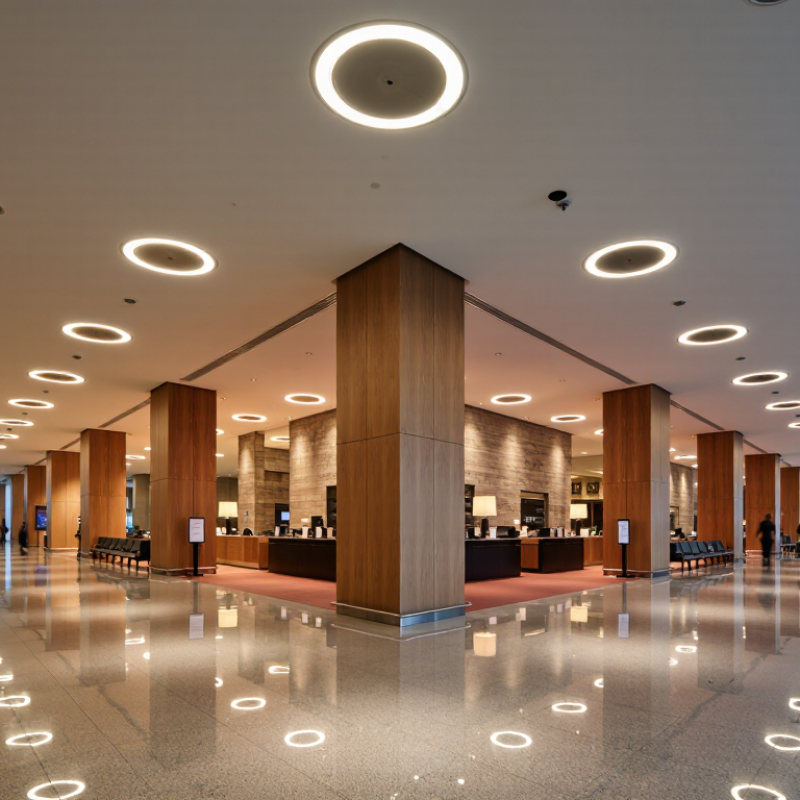
Why Choose LED Recessed Downlights for Global Projects?

What Are LED Recessed Downlights?

An LED recessed downlight is a ceiling light installed inside a prepared opening.

Only its trim and lens remain visible after installation. An LED module produces light, while a heat sink moves warmth away from sensitive components. Many models include a driver, reflector, diffuser, and adjustable mounting clips. Together, these parts create a clean beam with limited ceiling clutter. That is the basic idea.

For global projects, this compact design suits offices, hotels, homes, corridors, and retail interiors.

Light output is measured in lumens, while color temperature shows whether light appears warm or cool. Beam angle matters too. A narrow beam can highlight tables, while a wider beam reduces harsh pools on floors.

Reliable specifications should state input voltage, dimming method, color rendering, ingress protection, and expected lifetime. Project teams should verify local electrical rules and ceiling construction before ordering.

Paper data is not enough.

On site, poor cutout accuracy can leave gaps around the trim. An unsuitable driver may cause flicker, noise, or early failure. A practical check is to test one installed fitting before full installation.

Lighting plans can look balanced on paper, yet feel uncomfortable after installation. Maintenance access is often overlooked. Even a well-chosen downlight may fail when glare, ceiling depth, or replacement planning receives too little attention.

How Do LED Recessed Downlights Work?

Why Choose LED Recessed Downlights for Global Projects?

How Do LED Recessed Downlights Work?

An LED recessed downlight creates light through a semiconductor junction. When electric current passes through it, electrons combine with holes and release photons. A driver converts building AC power into controlled DC power. It also limits current and helps protect the LED from voltage changes. The module, reflector, and lens then shape the beam toward the floor or work surface.

Heat still matters. LEDs produce less wasted energy than older lamps, but they are not cold devices. A heat sink transfers thermal energy into the ceiling void and surrounding air. Poor ventilation can raise junction temperature, reduce light output, and shorten service life. The U.S. Department of Energy reports that LED products use at least 75% less energy and can last up to 25 times longer than incandescent lighting. These figures support lower maintenance demands, but actual results depend on driver quality, temperature, and installation accuracy.

Tips: Check the cut-out size, ceiling depth, beam angle, color temperature, and dimming method before ordering. Match the driver to local voltage and controls. On site, installers should keep insulation away from heat-sensitive components when required. A perfect beam rarely exists. Glare, shadows, and uneven spacing still need human review. That part is often underestimated. Performance claims should be verified through test reports, photometric files, and applicable safety certifications, not marketing language alone.

Why Choose LED Recessed Downlights for Global Projects? - How Do LED Recessed Downlights Work?

Data Dimension Typical Technical Data How LED Recessed Downlights Work Value for Global Projects
Operating Principle Solid-state lighting using semiconductor LED chips Electric current passes through a semiconductor junction, producing photons through electroluminescence. A phosphor layer may convert part of the emitted light to create white light. The absence of fragile filaments improves resistance to vibration and frequent switching.
Input Voltage Common product range: 100–240 V AC, 50/60 Hz; some models support wider ranges An electronic driver converts and regulates incoming AC power into controlled DC current for the LED module. A wide input range can simplify specification across regions with different mains-voltage systems. Local electrical requirements must still be verified.
System Power Typically 5–30 W for many residential, hospitality, retail, and office applications The driver supplies the LED array with the required current while managing electrical efficiency and stability. Lower connected load can reduce distribution capacity and operating energy requirements compared with many older lamp technologies.
Luminous Efficacy Common complete-fixture range: approximately 80–120 lm/W; actual performance depends on optics, driver, and thermal design LEDs convert electrical energy into light without heating a filament. Optical and driver losses reduce the final fixture efficacy. Supports energy-efficient lighting layouts and may reduce the number of fixtures required for a target illuminance.
Color Temperature Common options: 2700 K, 3000 K, 3500 K, 4000 K, and 5000 K The LED phosphor composition and optical design determine the correlated color temperature (CCT). Multiple CCT options allow adaptation to hospitality, residential, commercial, healthcare, and educational environments.
Color Rendering CRI values commonly range from 80 to 90+; higher specifications are available for color-critical spaces The emitted spectral distribution affects how naturally colors appear under the light source. Designers can select suitable color quality for retail displays, hospitality interiors, offices, homes, and clinical applications.
Beam Angle Typical choices: approximately 24°, 36°, 60°, and 90°; exact angles vary by reflector or lens A reflector or lens controls the direction and spread of light emitted by the LED module. Beam selection helps balance accent lighting, task lighting, uniformity, mounting height, and ceiling spacing.
Service Life Often rated at 25,000–50,000 hours to a specified lumen-maintenance criterion LED lifetime is primarily affected by junction temperature, drive current, thermal management, and component quality. Long service intervals can reduce replacement labor and maintenance access requirements, especially in high or difficult-to-reach ceilings.
Thermal Management Usually uses an aluminum heat sink or thermally conductive housing Heat is conducted away from the LED junction and dissipated through the fixture body and surrounding air. Effective heat dissipation helps preserve light output, color stability, and component life in different climates.
Dimming and Controls Options may include phase-cut dimming, 0–10 V, DALI, or other control interfaces The driver adjusts LED current in response to a compatible control signal or mains waveform. Control compatibility supports daylight harvesting, occupancy-based dimming, scene setting, and energy-management systems.
Ingress Protection Indoor models may be IP20; damp-location versions commonly use higher ratings such as IP44 or IP54; wet-location requirements may require IP65 or above Seals, gaskets, and enclosure design limit the entry of solid objects and water according to the declared IP rating. The correct rating helps adapt the same lighting concept to dry rooms, bathrooms, covered outdoor areas, and other project conditions.
Glare Control Available with diffusers, deep reflectors, baffles, and low-glare optical systems Optical shielding limits direct views of the high-luminance LED source and redistributes light onto the target surface. Appropriate glare control improves visual comfort in offices, classrooms, retail areas, and hospitality spaces.
Mechanical Installation Common installation methods include spring clips, mounting brackets, and adjustable ceiling cutouts The trim conceals the ceiling opening while clips or brackets secure the housing above the ceiling plane. Compact installation can provide a clean architectural appearance and flexible placement in new construction or refurbishment projects.
Flicker and Power Quality Performance depends on driver design; specifications may include flicker percentage, PstLM, SVM, power factor, and total harmonic distortion The driver smooths or regulates current supplied to the LED. Poorly designed drivers can produce visible or camera-detectable modulation. Checking project-specific flicker and power-quality requirements supports visual comfort and compatibility with electrical systems.
Safety and Compliance Relevant requirements may include IEC 60598 safety standards, photobiological safety assessment, electromagnetic compatibility, and local electrical regulations The luminaire, driver, insulation, grounding, optical system, and enclosure are evaluated against applicable safety and performance requirements. Early compliance review helps reduce approval delays and ensures suitability for the destination market.
Environmental and Lifecycle Impact Lower energy consumption and reduced replacement frequency compared with many conventional light sources; end-of-life recycling depends on local systems Efficient semiconductor light generation and long-life components reduce operating energy and the frequency of lamp disposal. Can support lifecycle-cost planning and sustainability objectives when combined with suitable controls, responsible materials, and proper recycling.

Note: Technical values are representative ranges for general project planning. Final selection should be based on the verified photometric file, installation environment, local regulations, control system, and the manufacturer’s current datasheet.

Why Are They Suitable for Global Projects?

LED recessed downlights suit global projects because they combine efficient operation with adaptable design. The U.S. Department of Energy reports that LED lighting can use at least 75% less energy and last up to 25 times longer than incandescent lighting. That difference matters in airports, hotels, offices, and housing developments where lights operate for long hours.

Global projects rarely share identical conditions. A reliable downlight should support regional voltage requirements, suitable color temperatures, and recognized safety testing. IEC-based testing, correct ingress protection, and verified thermal performance reduce risks in humid coastal areas or dusty construction zones. The International Energy Agency has reported that lighting represents roughly 15% of global electricity consumption, so even small efficiency gains can affect operating budgets across large sites.

Less energy. Fewer replacements.

Recessed formats also simplify visual coordination. Their compact profile works with different ceiling systems, while adjustable beam angles help address narrow corridors, workstations, or high ceilings. Photometric files make layout checks more precise before installation. However, efficiency claims can become misleading when poor heat dissipation shortens service life. This is an area that deserves more scrutiny. Project teams should compare measured lumen maintenance, driver compatibility, flicker performance, and warranty conditions, not only wattage. The Global Lighting Association and regional certification bodies provide useful reference points, but local compliance still requires professional verification.

What Factors Should Projects Consider Before Installation?

Why Choose LED Recessed Downlights for Global Projects?

Before installation, project teams should assess local electrical standards, voltage, and fire safety requirements. Regulations differ between countries and even between building types. A qualified electrical professional should verify certifications and wiring methods before ordering fixtures. This step prevents costly replacements later.

Ceiling construction also matters. Measure the available depth, insulation position, and cut-out diameter on site. Wet areas may require suitable ingress protection ratings. Offices often need low glare, while retail spaces may benefit from narrower beam angles. Check color temperature and color rendering carefully. A warm 3000K tone can suit hospitality areas, while 4000K may support focused workplace lighting. Dimming compatibility needs testing with the selected control system. It sometimes fails during commissioning. Photometric calculations and a small mock-up can reveal uneven brightness, shadows, or unwanted glare. Maintenance access should be planned too, especially in high ceilings.

Tips: Record the ceiling measurements twice. Keep sample fixtures on site. Test one complete circuit before mass installation. Confirm emergency lighting requirements with local experts. Do not assume one specification fits every region. A practical checklist should include energy performance, heat management, driver replacement, cleaning access, and warranty documentation. Project schedules are rarely perfect, so allow time for inspection and corrective work.

How Can Global Teams Plan LED Downlight Deployment?

Global teams should plan LED downlight deployment as a coordinated building process, not a simple fixture purchase.

Start with room functions, ceiling depths, mounting access, and local electrical requirements. A reading room may need low glare, while a corridor can use wider beam angles. Confirm voltage, frequency, dimming methods, and emergency-lighting interfaces before finalizing schedules. Small mismatches can delay installation.

Use lighting calculations for each zone, then review them with local engineers and installers.

Check illuminance, uniformity, color consistency, glare control, and heat dissipation. Product files should include photometric data, cutout dimensions, wiring diagrams, ingress ratings, and test reports. Keep these documents accessible across time zones. They reduce guesswork when teams change.

Pilot one representative area before ordering at scale. Test the downlights above real desks, textured ceilings, and reflective floors. Site conditions often differ from drawings.

They do.

A first layout may appear efficient but create bright patches or maintenance problems. Record installer feedback, inspection results, and replacement access. Allow spare units, clear labeling, and realistic delivery buffers.

This approach costs planning time, yet it helps global teams adapt without losing consistency between offices, hotels, schools, or retail spaces. One detail is easy to miss: cleaning schedules can affect perceived brightness, especially in dusty or high-traffic interiors.