2026 Best Types of Glass Pocket Doors for Global Buyers?
Glass Pocket Doors are moving beyond luxury interiors. They now support compact apartments, boutique hotels, offices, and accessible residential spaces. This shift reflects wider demand for flexible floor plans and stronger daylight performance. Grand View Research’s Interior Doors Market report identifies remodeling, space efficiency, and premium materials as important market drivers. Freedonia’s Windows & Doors industry analysis also links renovation activity with higher demand for customized door systems.
The best 2026 options should balance appearance, operation, safety, and long-term service. Tempered or laminated glass can improve impact protection. Slim aluminum frames can create cleaner sightlines. Soft-close hardware reduces noise beside bedrooms and meeting rooms. Yet, the frame pocket matters just as much. Poor installation can cause rubbing, vibration, or hidden moisture damage. Attractive glass cannot fix a weak wall system.
Architect Ludwig Mies van der Rohe’s famous principle, “Less is more,” remains useful here. It describes the visual appeal of frameless and minimalist Glass Pocket Doors, but it should not excuse under-engineered hardware. Buyers should compare acoustic ratings, glass thickness, track load limits, thermal performance, replacement parts, and local installation expertise. The right choice differs between a humid coastal hotel and a dry apartment renovation. That detail is easy to overlook.
This guide evaluates the leading Glass Pocket Doors types for global buyers in 2026. It considers real installation conditions, not showroom appearance alone. Reports offer useful direction, but product testing and qualified advice still matter. Market claims can be imperfect. Careful specification remains essential.
Glass Pocket Door Types: Single, Double, Telescopic, and Curved Systems
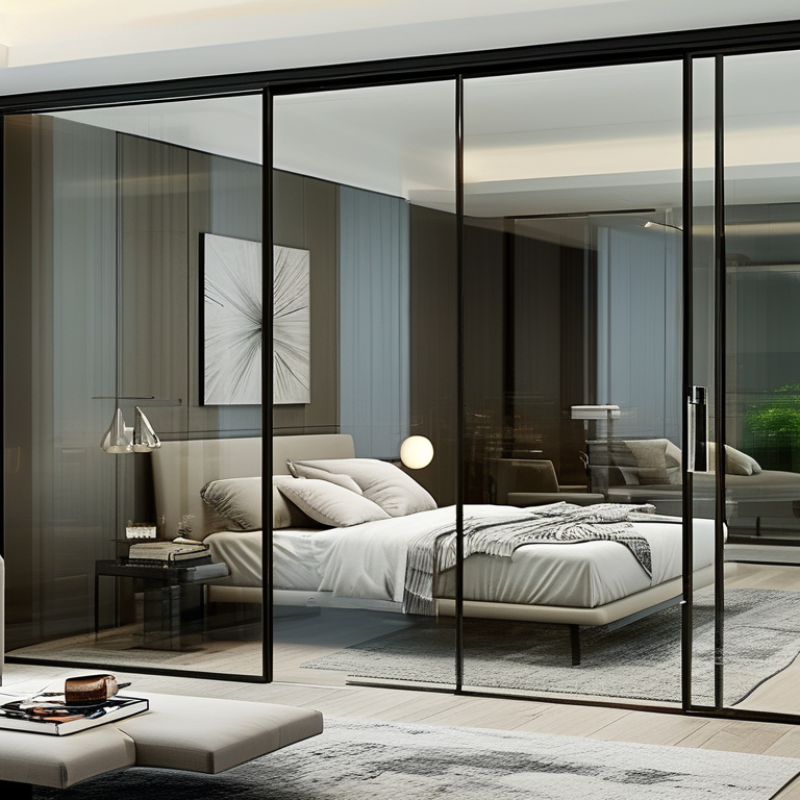
Glass pocket doors create a clean opening while hiding the panels inside the wall. Single systems suit bedrooms, offices, and narrow passages. They are simple to operate and usually easier to install. Double systems open from the center, making wider entrances feel balanced. Telescopic systems stack two or more panels behind one another. They save wall length, but their rollers and alignment need careful adjustment. Curved systems follow a shaped track and add a strong architectural effect. They require accurate radius measurements and skilled installation.
Tips: Check the finished wall thickness before ordering. Confirm panel weight, track capacity, and handle clearance. Tempered or laminated safety glass is a practical choice for many interiors. Ask for tested hardware details, installation drawings, and maintenance guidance. Small measurement errors can become expensive.
In real projects, telescopic doors often look ideal on paper, yet furniture can limit their travel. Curved doors may also reduce usable opening width. I have seen buyers focus on glass appearance and overlook floor-level alignment. That mistake causes rubbing, noise, and uneven gaps. Measure the opening at several points, not only once. Global buyers should also review packaging, replacement parts, delivery conditions, and local building requirements. Humid or dusty environments need suitable finishes and regular track cleaning. No system is perfect. The best choice balances opening size, wall space, access needs, appearance, and long-term serviceability.
Glass Selection: Tempered Glass Is About 4× Stronger Than Annealed Glass
2026 Best Types of Glass Pocket Doors for Global Buyers
For most glass pocket doors, tempered glass is the practical starting point. It is about four times stronger than annealed glass of the same thickness. This strength helps resist everyday impacts, such as a suitcase corner or a hurried shoulder. It is not unbreakable. That distinction matters.
When tempered glass breaks, it usually separates into small, blunt granules. Annealed glass can form large, sharp shards. For a busy hallway, bathroom, office, or hotel room, this difference deserves serious attention. Clear tempered glass gives a bright, open appearance. Low-iron tempered glass looks cleaner at the edges. Frosted or patterned surfaces improve privacy without blocking daylight.
The door design must match the glass selection. A thicker panel adds stiffness, but it also increases weight. The rollers, pull handle, floor guide, and wall pocket need compatible load ratings. Edge damage is another concern. A tiny chip near the glass edge can become a failure point later. Tempered glass cannot be cut or drilled after treatment, so measurements must be checked carefully.
For extra protection, buyers may consider laminated tempered glass. Its inner layer can help hold fragments together after breakage. However, it usually costs more and may require stronger hardware. Ask for thickness details, heat-treatment records, and impact-test information. I would not rely on the phrase “safety glass” alone. It sounds reassuring, but it can hide important differences.
Energy Performance: Compare Low-E U-Values Below 1.4 W/m²K and SHGC
For global buyers, energy performance should guide the choice of glass pocket doors. Low-E glass reduces heat transfer through the panel. A U-value below 1.4 W/m²K is a practical target for many energy-conscious projects. Lower values usually improve insulation, especially during cold nights. However, glass is only one part of the system. Frame material, spacer quality, seals, and installation also affect real performance.
SHGC shows how much solar heat enters through the glass. A lower SHGC can reduce indoor overheating in sunny climates. A higher SHGC may help warm rooms during colder seasons. Orientation matters. South- or west-facing doors often need tighter solar control. Climate data should guide the specification, not sales language. Still, numbers can mislead when testing conditions differ. Ask for certified performance reports and confirm whether values apply to the complete door or glass only.
Tips: Compare U-value and SHGC together. Check the tested door size and configuration. Inspect weather seals before installation. Leave space for accurate leveling. A small installation error can create drafts, even with high-performance glass. Local installers may also identify condensation risks that a standard product sheet misses. That advice is worth hearing.
2026 Best Types of Glass Pocket Doors for Global Buyers: Energy Performance
Comparison of representative low-emissivity glazing configurations with U-values below 1.4 W/m²K and solar heat gain coefficients (SHGC).
Lower U-values indicate better insulation, while lower SHGC values reduce solar heat gain in hot climates. The figures represent typical center-of-glazing performance targets; whole-door results will vary with frame material, spacer design, glass size, installation, and local testing standards.
Acoustic and Safety Ratings: Target STC 32–45 and Standards EN 12150
2026 Best Types of Glass Pocket Doors for Global Buyers
For acoustic comfort, target an STC rating between 32 and 45. STC 32 can reduce ordinary speech and television noise. STC 45 offers stronger privacy for bedrooms, offices, and meeting rooms. However, the glass alone does not achieve this performance. Pocket doors need tight perimeter seals, stable frames, and correctly adjusted rollers.
A door tested as a complete assembly is more reliable than a glass-only claim. Ask for laboratory reports showing the tested size, glass thickness, frame design, and seal configuration. Sliding hardware creates small gaps. Those gaps can reduce real-world sound control. Site inspections often find poor wall alignment behind the pocket cavity. That detail is easy to miss.
For safety, request compliance documentation for the selected glass. EN 12150 covers thermally toughened soda-lime silicate safety glass. It addresses fragmentation and mechanical strength, not the entire door system. Laminated safety glass may also support acoustic performance, but it requires its own applicable documentation. Check markings, test dates, and installation instructions before ordering.
A heavier panel is not automatically better. It may overload unsuitable rollers. I have seen attractive doors perform poorly because the seals were treated as optional. That was a costly oversight. Global buyers should confirm local building requirements, humidity exposure, impact risks, and replacement access. Ratings can change after installation, especially when the wall cavity is uneven or the door is frequently misaligned.