China’s glass partition industry has moved beyond simple room dividers. Today, buyers expect clean lines, stronger safety, acoustic control, and dependable installation. Glass Partition Doors often combine tempered or laminated panels with aluminum frames, concealed hinges, and adjustable floor seals. These details affect daily use more than attractive catalog images.
Industry data supports this growing demand. The International Energy Agency reports that buildings consume about 30% of global final energy and produce roughly 26% of energy-related emissions. This pressure encourages lighter, adaptable interior systems that support renovation and space efficiency. Grand View Research also identifies rising demand for modular office interiors and flexible commercial spaces. However, market reports define “glass partitions” differently. Their figures should not be treated as perfectly comparable.
This article introduces China’s top 10 Glass Partition Doors manufacturers through practical purchasing criteria. These include material traceability, glass-processing capability, hardware quality, acoustic testing, fire-related documentation, export experience, and after-sales support. Factory audits matter. So do installation drawings and replacement-part policies.
Details reveal the difference.
A reliable supplier should explain glass thickness, edge treatment, seal performance, and door-cycle testing. It should also provide project references with measurable specifications, not vague promises. Some rankings may favor visibility rather than engineering quality. That is an unavoidable weakness. Therefore, this list is a research starting point, not a final verdict. Buyers should verify certifications, production capacity, lead times, and local compliance before signing any contract.
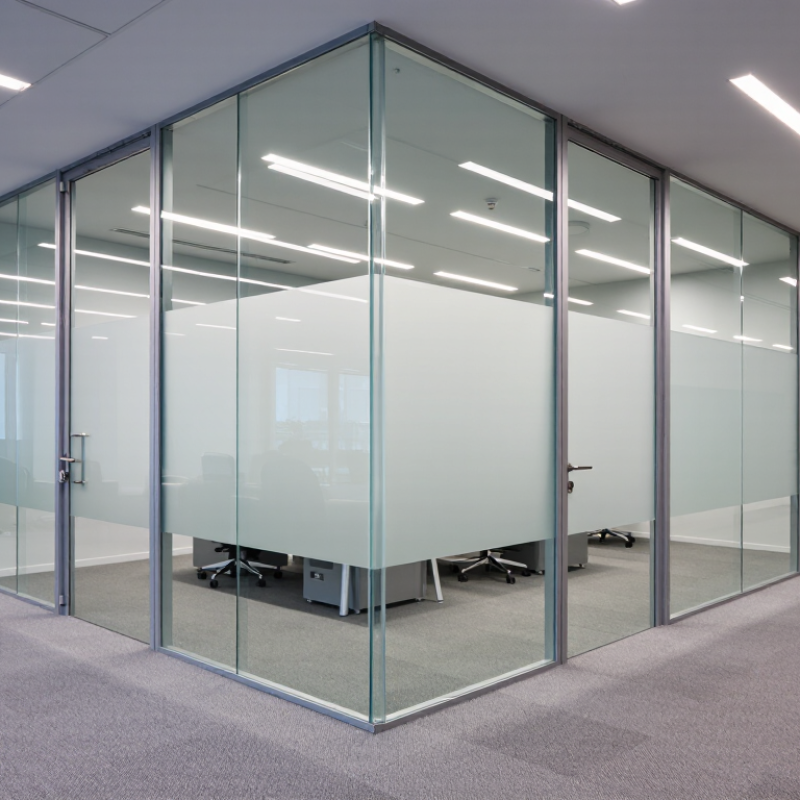
Glass partition doors are framed or frameless doors using tempered or laminated glass panels. They divide offices, meeting rooms, hotels, and retail spaces without blocking daylight. Clear glass creates openness, while frosted or textured glass improves privacy. Sliding, hinged, and pivot options suit different floor plans.
Chinese manufacturers attract global buyers through broad production capacity and flexible customization. Many factories can coordinate glass processing, aluminum profiles, hinges, locks, and acoustic seals under one supply plan. This reduces compatibility problems during installation. Experienced suppliers also provide shop drawings, sample approvals, load testing, and packing details before shipment. These steps matter more than a low quotation.
In project inspections, accurate measurements often decide whether a partition door performs well. A small wall deviation can affect alignment, sealing, and smooth movement. Ask for glass thickness, hardware specifications, tolerance ranges, and test records. Check whether the supplier understands local building requirements and installation conditions. Communication can still fail, especially across languages and time zones. Written drawings and signed samples help, but they do not replace site supervision. A reliable manufacturer should admit limits, suggest practical alternatives, and respond clearly when a detail changes. Perfect promises deserve caution.

A credible ranking starts with verifiable factory evidence, not attractive product photos. Check whether the manufacturer controls cutting, edging, tempering, drilling, and assembly. A factory visit can reveal more than a polished catalog. Look for clean storage areas, labeled glass racks, calibrated equipment, and documented inspection points.
Ask for recent project references with similar door sizes, glass thicknesses, and hardware requirements. Vague answers deserve lower scores.
Use a transparent scoring model for all candidates. Product quality may receive 30 percent, based on glass flatness, edge finishing, alignment, and hardware performance. Production capacity can account for 20 percent, while quality certificates and testing records receive 15 percent.
Request samples before ranking. Measure door gaps, check closing force, and inspect surface marks under bright light. Small defects matter.
Price should not dominate the list. A cheaper quote may exclude packaging, installation guidance, spare parts, or testing. Review payment terms and change-order procedures carefully. Manufacturers that answer technical questions clearly usually create fewer project delays.
Still, no ranking is perfect. A strong factory may perform poorly on communication, while a smaller supplier may offer excellent customization. Record both strengths and weaknesses. Recheck important claims through documents, samples, and customer conversations before placing a manufacturer among the top ten.
China’s top ten glass partition door manufacturers are best assessed through capability, not advertising.
The profiles reviewed cover large-volume factories, acoustic-system specialists, fire-rated door producers, and smaller custom workshops. Several operate automated cutting, edge-polishing, and CNC drilling lines. Others rely more heavily on skilled assembly. That difference appears in tolerances, corner alignment, and delivery consistency.
Tips: Request recent test reports, not only product photos. Check whether the stated sound rating covers the complete door assembly. Measure wall openings twice; small errors can create visible gaps. Ask for packaging details, especially corner protection and moisture control. Also compare lead times against factory capacity. A low quotation may hide manual rework, weak after-sales support, or inconsistent color batches. Industry reports from Grand View Research and Mordor Intelligence both identify commercial construction and interior renovation as major demand drivers, but their market definitions differ. Read the methodology before trusting the headline figure.
China’s top 10 glass partition door manufacturers usually serve offices, hotels, retail spaces, and high-end homes. Their key products include frameless glass doors, slim-frame partitions, sliding systems, pivot doors, and acoustic meeting-room enclosures. A dependable supplier should explain glass thickness, hardware load limits, installation tolerances, and replacement procedures clearly.
Tempered glass is common for strength, while laminated glass improves safety and sound control. Low-iron glass offers cleaner color, and frosted film provides privacy without blocking daylight.
Frames may use anodized aluminum, powder-coated aluminum, or stainless steel. Ask for test reports covering safety glass, acoustic performance, corrosion resistance, and fire behavior. ISO 9001 quality systems can support consistency, but a certificate alone proves little.
Customization may include measured panel sizes, curved corners, sliding tracks, concealed closers, digital locks, screen blinds, and custom surface finishes.
Experienced manufacturers should provide shop drawings, sample corners, hardware schedules, and installation guidance before production. Check whether drawings match the actual site conditions. Small errors matter.
A polished sample can hide weak sealing or noisy rollers.
Factory audits, reference projects, and independent inspections add practical confidence. Still, no supplier is perfect. Some quotations exclude delivery protection, field adjustments, or future hardware replacement. That detail deserves careful questioning. A better comparison weighs material traceability, communication speed, tolerance control, certification relevance, and after-sales support rather than choosing the lowest price.
Choosing among China’s top 10 glass partition door manufacturers requires more than comparing prices. Your project needs should guide the decision. Define the door type, opening size, glass thickness, acoustic target, and installation environment before requesting quotations. A reliable manufacturer should provide clear drawings, material specifications, production tolerances, and realistic delivery dates.
Ask for recent project evidence, not only polished photographs. Request glass samples, frame finishes, hardware samples, and test reports from recognized laboratories. Check whether the factory controls cutting, tempering, assembly, and final inspection internally. Experienced teams should explain how they prevent alignment problems, scratches, seal failure, and uneven gaps. Their answers matter more than impressive claims. A small mistake in measurement can create expensive site delays.
Tips: Compare at least three detailed quotations. Confirm packing methods and replacement procedures. Ask who supervises installation support. Visit the factory remotely if travel is difficult. Review communication speed and technical accuracy. A low price may hide weaker hardware or limited after-sales service. Also, leave room for honest uncertainty. Some project conditions become clear only after a site survey. The right manufacturer will identify those risks early, document changes, and adjust the design without making promises they cannot keep.