Get an estimate

Top Laminated Glass Partitions Suppliers Worldwide?

Laminated Glass Partitions are becoming a practical choice for offices, hotels, healthcare facilities, and premium residential interiors. They divide space without creating visual barriers. Natural light still reaches desks, corridors, and meeting rooms. Acoustic interlayers can also reduce everyday noise, although performance depends on thickness, framing, seals, and installation quality.

Market evidence supports this shift. The International Energy Agency reports that buildings remain responsible for roughly 30% of global energy demand. This keeps daylighting and efficient interior planning high on design agendas. Grand View Research identifies continued growth in the global flat glass market, driven by construction, renovation, and demand for safer glazing solutions. These figures describe wider glass markets, not partitions alone. That distinction matters.

This guide examines the Top Laminated Glass Partitions Suppliers Worldwide through a practical procurement lens. It considers glass composition, acoustic ratings, safety testing, customization, lead times, certifications, and after-sales support. Suppliers should demonstrate compliance with relevant standards, such as EN 14449 or ASTM C1172, where applicable. They should also provide test documentation, not vague performance claims.

A polished showroom sample proves little.

Site experience matters more.

Real projects reveal tolerances, edge quality, door alignment, and cleaning challenges. However, supplier rankings can never be completely universal. Regional codes, shipping conditions, budget limits, and installer skills change the final result. Buyers should verify every technical claim independently. The strongest supplier is not always the largest one. It is the company that consistently delivers safe, transparent, and maintainable partition systems for the project’s actual conditions.
Top Laminated Glass Partitions Suppliers Worldwide?

Types of Laminated Glass Partitions and Their Main Applications

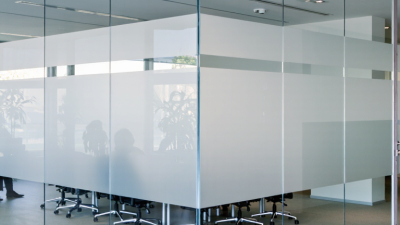
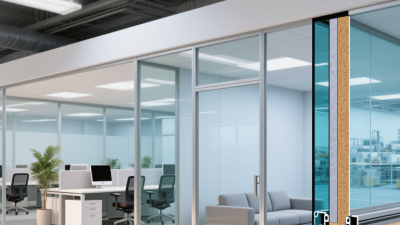
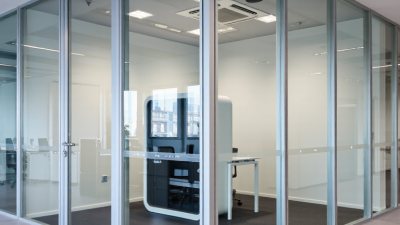
Laminated glass partitions combine two or more glass sheets with a protective interlayer. Clear laminated glass keeps offices bright while reducing visual barriers. Frosted or acid-etched surfaces provide privacy in meeting rooms, clinics, and changing areas. Tinted glass can soften glare near large windows, although color samples may look different under artificial lighting. Acoustic laminated glass uses a sound-control interlayer. It suits conference rooms, hotel bedrooms, and busy reception zones.

For demanding environments, safety laminated glass helps hold broken pieces together. Fire-resistant laminated systems may protect escape routes, but only when tested as a complete assembly. In schools and healthcare facilities, impact resistance, cleanability, and edge protection deserve close attention. Retail stores often use transparent partitions to protect counters without hiding products. Airports and transport hubs may choose thicker systems for heavy traffic and stronger wind exposure. I have seen attractive designs fail because the frame and glass were specified separately.

Tips: Ask suppliers for independent test reports, interlayer details, glass thickness, and installation guidance. Check acoustic ratings for the whole partition, not the glass alone. Leave space for door hardware and movement joints. Small details matter. Also, confirm whether the selected finish shows fingerprints, dust, or uneven lighting before ordering samples.
Key Standards for Evaluating Global Laminated Glass Suppliers

Global laminated glass suppliers should be judged by documented performance, not catalog size. Start with compliance to ISO 12543 and EN 14449, or ASTM C1172 for North American projects. These standards address laminated glass construction, durability, and visual quality. Ask for independent test reports, not only certificates. Impact classification under EN 12600 or ANSI Z97.1 should match the building’s use, height, and occupancy.

Traceability reveals practical experience. A reliable supplier should identify the glass batch, interlayer type, autoclave cycle, and inspection date. Request samples with exposed edges. Look for bubbles, haze, delamination, and uneven alignment after humidity or heat testing.

Weak edge protection can fail long before the center looks damaged. It happens.

Thermal and environmental evidence also matters. The 2024 Global Status Report for Buildings and Construction reports that buildings consume about 32% of global energy and produce roughly 34% of energy-related emissions. Therefore, suppliers should provide tested U-values, solar-control data, and environmental product declarations where available. Grand View Research reported continued growth in the global laminated glass market, driven by safety, acoustic, and architectural applications. Growth alone proves little. Compare declared test methods, warranty limits, factory quality systems, and delivery records across regions. A supplier with excellent glass but vague documentation remains a project risk.

Leading Regions in the Laminated Glass Partition Industry

Asia-Pacific remains the strongest regional center for laminated glass partition demand. Fortune Business Insights valued the global laminated glass market at USD 22.28 billion in 2023. Its forecast reaches USD 36.92 billion by 2032, with a 5.65% CAGR. China, India, Japan, and Southeast Asian markets benefit from dense commercial construction and office redevelopment. Suppliers in these regions often support large projects with 10–12 mm panels, acoustic interlayers, and factory-controlled edge finishing. On busy sites, those details matter. A poorly polished edge can become a visible weakness under bright ceiling lights.

Europe holds a different advantage. Strict building-performance expectations encourage partitions that improve safety, sound control, and daylight transfer. Mordor Intelligence identifies Europe as a significant laminated glass market, supported by renovation activity and energy-conscious design. North America also shows steady demand, especially in offices, healthcare interiors, and hospitality projects. Grand View Research reports continued growth in architectural glass applications through the decade. However, regional rankings should be read carefully. Public reports usually measure laminated glass overall, not partitions alone. That limitation can distort supplier comparisons. A company with strong automotive sales may appear larger than a specialist serving interior architecture. Buyers should check interlayer specifications, impact testing, lead times, installation experience, and project references before choosing a regional supplier. The data is useful, but not flawless.

Top Laminated Glass Partitions Suppliers Worldwide? - Leading Regions in the Laminated Glass Partition Industry

Leading Region Regional Position Primary Demand Sectors Common Laminated Glass Configurations Frequently Referenced Standards Supplier Ecosystem Key Purchasing Considerations
Europe Highly mature architectural-glass market with strong emphasis on safety, energy performance, circularity and documented product conformity. Offices, public buildings, healthcare, education, hospitality and high-end residential interiors. Clear or low-iron laminated glass, acoustic interlayers, frosted or translucent interlayers, and decorative multilayer panels. EN 14449 for laminated glass, EN 12600 for pendulum impact classification, and national building regulations based on Eurocodes and local safety requirements. Very strong — broad processing capacity, established certification practices and extensive interior fit-out expertise. Acoustic rating, fire-performance documentation where required, environmental product declarations, recycled content, lead time and conformity marking.
North America Large commercial interiors market supported by standardized safety-glazing requirements and demand for customizable partition systems. Corporate offices, airports, retail, education, healthcare and hospitality projects. Laminated safety glass, acoustic glazing, switchable or privacy-compatible assemblies, and oversized panels subject to handling limits. ASTM C1172 for laminated architectural flat glass, ANSI Z97.1 and CPSC 16 CFR 1201 for safety glazing applications, together with local building codes. Very strong — mature fabricator and installer networks with strong project-specification capabilities. ASTM test reports, code compliance, acoustic performance, shop-drawing support, field measurement, installation warranty and replacement logistics.
East Asia Major manufacturing and construction region with extensive glass-processing capacity and strong demand from commercial and high-density urban development. Office towers, mixed-use developments, transport facilities, retail, hotels and residential interiors. Clear, tinted, low-iron, acoustic, colored and decorative laminated glass; both framed and frameless partition assemblies are widely specified. GB 15763.3 for laminated glass used in building safety glazing in China, JIS-based requirements in Japan, and local building standards in each market. Very strong — high production scale, broad customization and substantial export-oriented processing capacity. Interlayer quality, optical clarity, edge protection, dimensional tolerance, export packaging, third-party testing and consistency between production batches.
Southeast Asia Growing architectural-glass market driven by urbanization, commercial construction, tourism facilities and regional manufacturing investment. Hotels, offices, shopping centers, condominiums, airports and institutional buildings. Clear safety glass, acoustic partitions, frosted designs, colored interlayers and laminated panels integrated with aluminum or stainless-steel framing. Local building regulations, project-specific adoption of EN, ASTM, JIS or national safety-glazing standards, depending on the country and specification. Strong and expanding — supply is supported by local processors, importers and regional construction contractors. Humidity and temperature resistance, delivery reliability, technical submittals, local code acceptance, installation capability and after-sales support.
Middle East Premium project market with substantial demand for visually distinctive interiors, high-performance glazing and rapid delivery for large developments. Hotels, airports, luxury retail, corporate headquarters, healthcare, cultural venues and mixed-use developments. Low-iron clear glass, colored or patterned interlayers, acoustic laminates, safety partitions and bespoke oversized panels. Project specifications commonly reference EN, ASTM or equivalent international safety and performance standards, subject to local authority approval. Strong in major cities — supported by specialist fabricators, international contractors and imported architectural-glass products. Solar exposure, thermal stress, acoustic control, fire strategy, import lead time, project certification and installation under demanding site conditions.
Oceania Well-regulated market where safety glazing, impact resistance and installation quality are central to commercial and residential interior specifications. Offices, education, healthcare, retail, hospitality, apartment buildings and public infrastructure. Laminated safety glass, acoustic partitions, translucent panels and framed systems designed for high-traffic interior environments. AS/NZS 2208 for safety glazing materials, AS 1288 for glass selection and installation, plus applicable national construction requirements. Mature but smaller in scale — strong compliance culture with a mix of local processing and imported products. Impact classification, installation details, moisture protection, acoustic performance, local certification, transport distance and service availability.

Note: Regional comparisons are qualitative industry assessments. Applicable standards and approval requirements vary by country, building type and project specification. Commonly referenced standards include EN 14449, EN 12600, ASTM C1172, ANSI Z97.1, CPSC 16 CFR 1201, GB 15763.3, AS/NZS 2208 and AS 1288.

Supplier Selection Criteria: Quality, Customization, and Service

Top Laminated Glass Partitions Suppliers Worldwide?

Quality begins with the interlayer, not the polished surface. Laminated glass should meet relevant standards such as EN 14449, ISO 12543, or ASTM C1172. These standards address safety performance, durability, and production consistency. Grand View Research reported that the global laminated glass market was valued at approximately USD 29 billion in 2023, with continued growth expected through 2030. That expansion increases supplier choice, but it also makes verification harder. Ask for batch records, impact-test results, acoustic ratings, and edge-sealing details. Clear answers matter.

Customization should solve a site problem. A reliable supplier can adjust panel dimensions, interlayer type, opacity, color, acoustic performance, and hardware coordination. Request a full-size sample when possible. Small samples rarely reveal visual distortion, edge haze, or color shifts across a long partition. According to the U.S. Green Building Council, material transparency and documented environmental information support stronger building-product decisions. Environmental Product Declarations can therefore add useful evidence, although they should not replace performance testing.

Service is often tested after the purchase order. Confirm drawing-review procedures, packaging methods, lead times, replacement policies, and installation guidance. A supplier that answers quickly but avoids technical documents may create expensive delays. My practical concern is simple: specifications can look complete while site tolerances remain unclear. Require written confirmation of maximum panel size, glass thickness, drilling limits, and responsibility for final measurements. No supplier is perfect. The selection process should leave fewer assumptions.

Trends Shaping the Future of Laminated Glass Partition Systems

Top Laminated Glass Partitions Suppliers Worldwide?

Trends Shaping the Future of Laminated Glass Partition Systems

Laminated glass partition systems are evolving beyond simple office dividers. Across global projects, designers now request acoustic comfort, visual openness, and improved occupant safety. Suppliers are developing thinner interlayers that reduce speech transfer between meeting rooms. In busy workplaces, this can protect concentration without blocking daylight. The difference is noticeable.

Switchable privacy glass is gaining attention in healthcare, hospitality, and executive interiors. It changes from clear to opaque when connected to a control system. However, electronic components increase maintenance needs and installation complexity. Not every project needs smart glass. Careful planning matters. Low-iron glass, recycled inputs, and material passports are also influencing procurement. Laminated glass remains difficult to recycle because the interlayer bonds tightly with the glass. This limitation deserves more attention.

Experienced suppliers increasingly provide engineering support, not only finished panels. Buyers should request acoustic reports, safety data, fire classifications, and installation guidance for the project’s location. Sample testing can reveal color shifts, edge visibility, and unwanted reflections under real lighting. Digital coordination helps align partitions with ceilings, doors, and electrical systems. Yet worldwide sourcing may create longer lead times and replacement challenges. Glass can still break. That honesty matters. A dependable supplier explains risks, documents tolerances, and supports maintenance after installation.

Top Laminated Glass Partitions Suppliers Worldwide? Trends Shaping the Future of Laminated Glass Partition Systems

Global urban population increased from 46.7% in 2000 to 57.3% in 2023 and is projected to reach 68.4% by 2050. This sustained urbanization is increasing demand for flexible, space-efficient interiors, supporting the adoption of laminated glass partition systems for offices, hospitality, healthcare, and mixed-use buildings. Historical data: World Bank, World Development Indicators. Projection: United Nations, World Urbanization Prospects.