Get an estimate

China Top Industrial Glass Walls Manufacturers Guide

China Top Industrial Glass Walls Manufacturers Guide begins with a practical question: what must a glass wall actually achieve? It should admit daylight, control heat, reduce noise, and protect occupants. Appearance alone is not enough.

The U.S. Department of Energy reports that windows can account for 25%–30% of building heating and cooling energy use. This makes glass selection a performance decision, not merely a design choice. Industry assessments from Grand View Research also indicate steady growth in architectural glass demand, driven by commercial construction, renovation, and energy-efficiency requirements. However, market forecasts vary by region and methodology. Buyers should verify the original datasets.

Dr. Helen Sanders, a building-envelope specialist, has stated, “The window is often the weakest link in the building envelope.” That warning deserves attention. A factory may offer low-E coatings, insulated glass units, laminated safety glass, and thermally broken frames. Yet poor edge sealing can still create condensation beside a conference-room floor. This guide examines China’s Industrial Glass Walls manufacturers through measurable criteria, including glass configuration, U-value, solar heat-gain control, acoustic ratings, structural testing, production consistency, and installation support.

Factory visits reveal details that brochures often hide. Check spacer alignment, sealant continuity, tempering records, and packaging protection. Ask for test reports, not attractive samples.

There is no perfect supplier. Some companies excel at customization but lack international documentation. Others deliver strong testing but limited design flexibility. That tension matters. A reliable shortlist must reflect project climate, building height, budget, and maintenance expectations.

China Top Industrial Glass Walls Manufacturers Guide

Industrial Glass Walls: Definition, Types, and Key Applications

Industrial Glass Walls: Definition, Types, and Key Applications

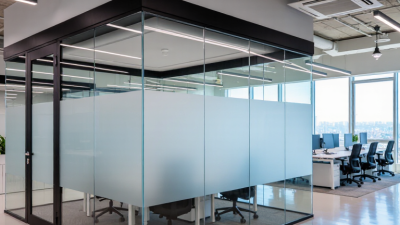
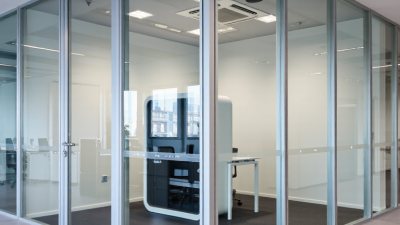
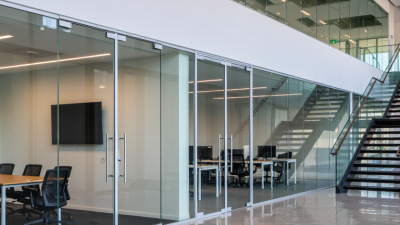
Industrial glass walls are non-load-bearing systems used to divide, protect, or enclose commercial and manufacturing spaces. They support visibility without removing physical separation. Unlike ordinary windows, these walls often cover large areas and connect with floors, ceilings, doors, and structural frames.

Common types include framed partitions, frameless glass screens, curtain wall systems, and insulated glass assemblies. Tempered glass offers improved impact resistance and breaks into smaller pieces. Laminated glass holds together after damage, which improves containment. Insulated units can reduce heat transfer and outside noise. Fire-rated assemblies serve specialized areas, but their performance depends on the complete tested system. Details matter.

In factories, glass walls can separate clean rooms, control rooms, laboratories, offices, and visitor routes. Supervisors gain clearer sightlines across production zones. Workers may also receive better daylight, although glare can become a real problem. In my project reviews, I have seen attractive walls fail because door hardware, seals, or floor joints were poorly coordinated. The glass was not the weak point.

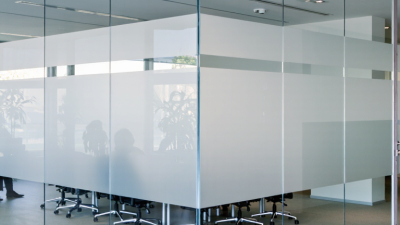
A reliable specification checks thickness, edge quality, framing strength, ventilation, acoustic needs, and local safety requirements. It should also consider cleaning access and future replacement. For humid or dusty facilities, unsuitable seals may age faster than expected. Clear glass is not always the best choice. Frosted areas, safety markings, or controlled transparency can protect privacy and reduce collision risks. Good design balances visibility with heat control, maintenance, and worker safety.

China’s Industrial Glass Wall Manufacturing Landscape

China’s industrial glass wall manufacturing landscape is shaped by scale, engineering discipline, and uneven quality control. The National Bureau of Statistics reported about 1.01 billion weight cases of flat glass production in 2023. This large base supports factories producing tempered, laminated, coated, and insulating glass systems. Industrial projects increasingly specify low-emissivity coatings, thicker laminates, and larger panels. These choices reduce heat transfer and improve impact resistance. However, bigger panels also expose weaknesses in edge processing, transport, and installation.

Manufacturers commonly combine automated cutting with manual inspection. Typical production checks include glass thickness, surface defects, roller-wave distortion, sealant adhesion, and visible light transmission. China’s GB 15763 standards provide key safety requirements for architectural safety glass. Export projects may also require testing under international standards. Market reports from Grand View Research and Mordor Intelligence identify energy efficiency and urban development as major drivers for architectural glass demand. Their forecasts differ, though. This reflects inconsistent definitions across market studies. It is a useful warning against trusting one number.

Tips: Ask for recent test reports, not only product brochures. Inspect spacer bars, corner seals, and protective packaging. Request sample panels before approving mass production. A factory visit can reveal more than a polished website. Check whether inspection records match the actual production line. Small gaps often become expensive failures. Be cautious with unusually low quotations; the missing cost may involve coating quality, glass sorting, or installation support.

China Top Industrial Glass Walls Manufacturers Guide - China’s Industrial Glass Wall Manufacturing Landscape

Industry Dimension Common Industrial Glass Wall Data Manufacturing or Specification Notes Relevant Standard or Reference
Primary Wall Systems Unitized curtain walls, stick-built curtain walls, structural-glazing systems, point-supported glazing, and glass-and-metal screen walls System selection depends on building height, installation sequence, wind exposure, drainage design, thermal performance, and maintenance access. GB/T 21086-2007; EN 13830; ASTM E330/E330M
Glass Safety Types Heat-strengthened glass, fully tempered glass, laminated glass, and insulating glass units Safety glazing is commonly selected for doors, entrances, overhead areas, impact-prone zones, and locations where post-breakage retention is required. EN 12150-1; EN 1863-1; EN 14449; EN 1279
Typical Monolithic Glass Thickness Common processed thicknesses include 6 mm, 8 mm, 10 mm, 12 mm, 15 mm, and 19 mm Final thickness is determined by pane size, wind load, support conditions, thermal stress, human impact requirements, and engineering calculations. EN 572 series; ASTM C1036; project structural calculations
Laminated Glass Construction Two or more glass plies bonded with polymer interlayers such as PVB or ionoplast interlayers Laminated construction improves post-breakage retention, acoustic performance, security resistance, and ultraviolet filtering; interlayer selection affects stiffness and edge durability. EN 14449; ISO 12543; ASTM C1172
Insulating Glass Units Double-glazed and triple-glazed units with sealed cavities, commonly using air or inert gas fills Performance depends on cavity width, low-emissivity coating, spacer technology, gas retention, seal design, and edge temperature. EN 1279; ASTM E2190; ISO 20492
Low-Emissivity Glass Online pyrolytic coatings and offline sputtered coatings are the two principal low-emissivity technologies Coating position, solar-control target, visible transmittance, climate zone, and orientation should be considered during façade design. EN 1096; ISO 9050; NFRC 100
Aluminum Curtain-Wall Frames Thermally improved aluminum profiles are widely used for commercial and industrial glazing façades Key design variables include mullion depth, transom spacing, thermal breaks, pressure plates, gaskets, drainage paths, and fastener capacity. EN 13830; EN 14024; ASTM C1184
Fabrication Process Cutting, edge processing, drilling, tempering, coating or laminating, insulating-glass assembly, frame fabrication, and final inspection Production control should include dimensional inspection, edge-quality checks, coating identification, sealant compatibility, and traceability by batch. ISO 9001 quality-management principles; EN 1279-6; project inspection plan
Air-Tightness Testing Air leakage is tested at specified pressure differences across the completed façade or representative specimen Results are affected by gaskets, sealant joints, panel interfaces, opening vents, pressure-equalization paths, and installation quality. ASTM E283/E283M; EN 12153
Water Penetration Testing Static-pressure, dynamic-pressure, and hose-nozzle tests are used for façade water-resistance verification Effective drainage, pressure equalization, corner detailing, sill design, and seal continuity are essential to performance. ASTM E331/E331M; ASTM E1105; AAMA 501.1; EN 12154
Structural Performance Design commonly considers wind pressure, deflection limits, glass bite, frame strength, anchors, and inter-story movement Wind-load design must use the project location, building height, terrain category, exposure, façade zone, and applicable national code. ASTM E330/E330M; EN 13116; GB 50009
Thermal Performance Whole-window or whole-curtain-wall thermal performance is governed by center-of-glass, frame, spacer, edge, and linear thermal-bridge effects U-value and solar-heat-gain targets should be specified for the complete façade assembly rather than glass alone. ISO 10077-1; ISO 12631; NFRC 100
Acoustic Performance Sound insulation is influenced by glass thickness, asymmetry, laminated interlayers, cavity width, frame joints, and perimeter sealing Laboratory ratings should be distinguished from field performance because installation joints and flanking paths can reduce actual results. ISO 10140; ISO 717-1; ASTM E90
Surface Finishes Anodized aluminum and factory-applied powder coatings are common frame-finishing options Color, gloss, coating class, pretreatment, film thickness, and corrosion exposure should be defined before production. Qualanod specifications; AAMA 2603/2604/2605; ISO 7599
Quality-Control Documents Factory inspection records, material certificates, glass-processing records, coating reports, sealant data, test reports, and packing lists A reliable procurement package should connect drawings, approved samples, production batches, inspection results, and installation units. ISO 9001; EN 10204; project quality-assurance requirements
Common Industrial Applications Factories, warehouses, logistics centers, office buildings, transport facilities, showrooms, laboratories, and high-bay production spaces The appropriate façade solution depends on daylighting, ventilation, fire strategy, impact exposure, security, energy targets, and cleaning access. Project specifications, local building codes, fire regulations, and façade engineering calculations

Note: Performance values and glass configurations must be confirmed through project-specific calculations, approved shop drawings, laboratory testing, and the applicable building codes.

Leading Manufacturer Capabilities and Product Specializations

Industrial glass wall manufacturers now compete through measurable capabilities, not attractive catalog images. Experienced factories should show tested U-values, visible light transmission, acoustic ratings, and air-tightness results. These details reveal whether a wall suits a humid hotel, a noisy airport, or a high-rise office.

Product specialization matters. Thermally broken aluminum systems reduce conductive heat loss at frame joints. Low-emissivity insulated glass improves interior comfort near large façades. Laminated glass adds safer breakage behavior and better sound control. UNEP’s 2023 Global Status Report for Buildings and Construction states that buildings consume about 34% of global energy and create approximately 37% of energy-related emissions. Therefore, manufacturers should offer performance-led configurations, not one standard panel. Independent laboratory testing, factory quality records, and installation guidance also strengthen reliability. Some suppliers still overstate performance. That deserves careful review.

Tips: Request complete test reports, not isolated figures. Check spacer type, coating position, frame depth, and drainage design. Ask for samples with corner joints. Small details often fail first. A practical comparison should include warranty terms, replacement access, lead times, and local climate data. The International Energy Agency also emphasizes efficient building envelopes as a major route to lower operational energy use. Still, energy savings depend on orientation, shading, ventilation, and workmanship. A perfect glass specification cannot repair poor installation.

China Industrial Glass Walls: Product Specialization Benchmark

Typical visible light transmittance varies by architectural glass wall solution. Clear float glass provides the highest daylight transmission, while tinted and fritted glass offer greater solar-control and design flexibility.

Reference values are typical industry ranges and may vary according to glass thickness, coating, color, frit coverage, glazing configuration, and applicable building standards.

Quality Standards, Customization, and Production Considerations

China’s industrial glass-wall manufacturers should be assessed beyond price and showroom appearance. ISO 9001 certification indicates controlled processes, but it does not guarantee perfect installation. Buyers should request heat-soak test records, optical distortion limits, edge-quality checks, and batch traceability. Tempered glass should meet EN 12150 or ASTM C1048, while laminated systems should align with ISO 12543. Factory experience matters here.

Customization affects both performance and production risk. Engineers may specify low-emissivity coatings, acoustic interlayers, ceramic frit patterns, or oversized panels. Each option changes lead time, handling requirements, and inspection points. For example, a darker coating can improve solar control but may expose color variation between production batches. Requesting a full-size mock-up is wiser than approving small samples alone. Small samples can mislead.

Energy performance deserves equal attention. The International Energy Agency reports that buildings consume about 30% of global final energy. The 2023 UNEP Global Status Report states that buildings and construction generated approximately 37% of global energy-related emissions. Therefore, glass-wall specifications should include U-value, solar heat-gain coefficient, visible transmittance, and airtightness targets. Production planning should confirm furnace capacity, coating compatibility, packaging strength, and replacement availability. Some suppliers still present impressive compliance files without explaining test conditions. That gap deserves careful questioning.

How to Evaluate and Select a Chinese Glass Wall Manufacturer

Selecting a Chinese industrial glass wall manufacturer requires more than comparing prices. Start with verified production experience, not polished showroom images. Ask for completed projects with similar glass thickness, framing systems, and building conditions. Review technical drawings, material certificates, inspection records, and installation instructions.

A capable manufacturer should explain wind-load calculations, thermal performance, safety glass options, drainage design, and sealant compatibility. Their engineers should answer clearly, even when the answer is inconvenient. Request a physical sample and inspect its edge finish, coating uniformity, hardware alignment, and gasket fit. A small sample can reveal poor process control. Factory visits also matter. Check storage areas, cutting equipment, welding quality, and final inspection routines. I have learned that attractive samples do not always represent stable batch production.

Tips: Compare written specifications line by line. Confirm tolerance limits, packaging methods, replacement procedures, and warranty terms. Ask how defects are recorded and corrected. Keep communication in approved drawings, not informal messages alone. Check whether the supplier can provide testing from independent laboratories when required. A low quotation may exclude engineering support, export packing, or site coordination. That omission can become expensive later. Do not ignore the uncomfortable details. A reliable partner welcomes questions, documents changes, and admits limitations before production begins.